
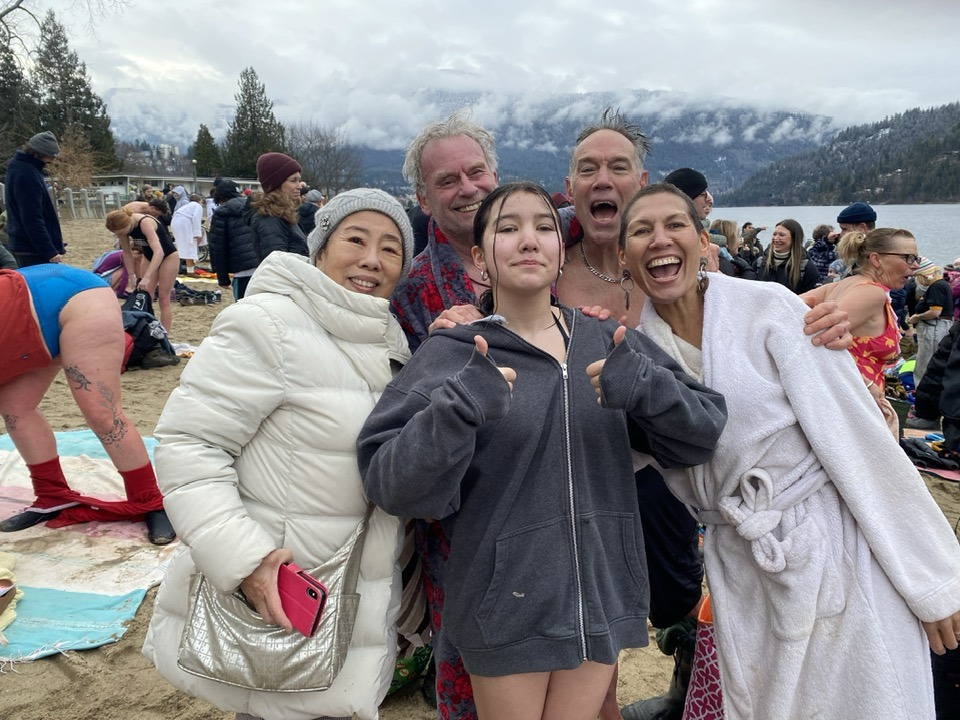
As I sauntered into the frigid water amidst the flurry of screams, splashes, and gooseflesh, I was reminded of the simple yet profound lesson: don’t assume anything. The annual polar bear dip in the lake has become the only real symbolic tradition our family shares.
It began during the debaucherous phase of my husband and my early courtship over two decades ago. Still thoroughly inebriated from the epic party of New Year’s Eve, we impulsively jumped into the bone-chilling glacial waters of Kootenay Lake, desperate for a cure from our horrible hangovers.
Unbeknownst to us at the time, this impulsive act would evolve into something far more meaningful. What started as a way to rid the debris of toxicity transformed into a symbolic ritual—clearing the slate for a fresh start each new year. I had so much to release from the most challenging year of my life.
Leading up to the grand event, I was still pleading for respite from the debilitating pain induced by my chronically infected wound. It was outrageous to even consider jumping into a lake already laden with bacteria, made worse by a slew of people transforming it into a cesspit of infection-loving agents. Not to mention, I was on standby for a palliative mastectomy, which wasn’t for a curative cause but rather a necessary step, with its own unknowns, in order to proceed to the next phase of treatment that would hopefully nuke the cancer.
I had reached—or so I thought—a stalemate with my eight-month ordeal of enduring the gruesome ulceration of my tumour. Only in hindsight can I see the blessings hidden within periods of doubt, suffering and fear. I wouldn’t have been eligible for surgery if not for the recurring infections. I wouldn’t have started the new treatment had my cancer not mutated into a different kind. I was ready to let go, my hands open.
But my hands gripped, white knuckled in the darkness. At night, my trust waned, smashing against fears and contradictions of my own making. My heart raced with the terror of losing parts of myself. What security was there in what I was willing to give? My mind fought, freaked, and froze around runaway thoughts that I could not control. Would I regain mobility in my already compromised arm? Would I be left with a Frankenstein version of my current wound, along with a donor site that might not heal properly? Would my cancer run rampant? Death lurked close by, and faith was but a whisper in my shallow breath.
With a new day and along with the light, I pray to strengthen my trust in letting go. The more I release the need to control and arrange the world around me to feel safe, the freer I become to recognize the path unfolding for me. I’m learning to trust this way because I feel at peace with the next step—only as it unfolds. When I analyze and weigh my options, mingling them with combative emotions, all that happens is that I go around in vicious circles. Decision making brings only anxiety and uncertainty. I cannot be trusted operating from this place.
In my right-mindedness, I see how my perceived safety net is hooked onto anchors that aren’t secured deeply. My constant attempts to rearrange and stay on top of what I’m trying to control only make the net tremble, precariously holding everything together.
This is why A Course in Miracles teaches me to let go of what I think I know and offer my free will for guidance—to see beyond the mind I have constructed and trust in what I don’t yet have the capacity to understand. It’s a big ask, one I often meet with resistance: to take responsibility for all that I don’t want to feel, while finding empowerment in giving up what I’ve given power to.
The help I’ve received has come in ways I could never have planned or imagined for myself. My nemesis, the staph infections that prevented me from getting chemo, instead allowed me to receive the gentler targeted therapy portion of the IV cocktail.
I never would have imagined that one treatment of the targeted therapy would reroute me into the lake. By the time the surgeon called me back just after Christmas, my wound had transformed from an angry, oozing mess into something that actually looked like it was healing. Before I could share this update, he gravely explained that I would need invasive surgery to remove my breast, cut into my pectoral muscle, and go deeper into the chest wall. This would be followed by extensive reconstructive surgery requiring specialists. I’d have to carve out parts of myself to remake what had been taken away—all with the looming risk of poor healing or the cancer compromising me further.
He was surprised and excited when I told him that my wound looked better than it ever had—that it actually seemed to be closing with healthy tissue. For the first time in over a year, I no longer needed morphine to manage my pain! He agreed that the best path forward was to get on with treatment as soon as possible.
My path continues to twist and turn in surprising ways, reminding me that a higher working order is in play when I choose to trust. The onslaught of antibiotics for my infection had concerning repercussions on my gut. When another three weeks passed, I received the same unorthodox treatment without the harsh chemotherapy. Truth be told, I’m still terribly afraid of chemo. Even though the infection and gut issues looked horrible from the outside, on the inside, I felt as though I was being gently guided to not be afraid.
The genetic testing result I’d been waiting for over two months might be ready before the next round of treatment. Knowing I have a good match would give me the courage to shift my perspective and fully accept chemo as medicine, not poison. I’m placing my trust in divine timing and also leaving room to have no set plan in place.
My practice is to remember to stay open, even when I feel the urge to close tightly around all that is precious to me in an attempt to protect it. There is a paradox in handing it all over, where freedom intertwines with the terror of letting go, until the moment both hands open. I keep coming up for air on a regular basis. I forget, and then, by the grace of God, I remember that life cannot be truly lived while fearing the loss of what we love. A Course In Miracles teaches that Love is the absence of fear.
I’d triple-secured waterproofing over what was left of the open wound—an upside-down heart-shaped opening where my breast used to curve. Below it, a bridge of healthy tissue between another meaty section that’s shaped like a semicolon. The deep, long and narrow bottom of the crevice, prone to infection- hidden for months, had finally widened and risen to the surface to dry out. I couldn’t even remember the last time I’d fully submerged in water.
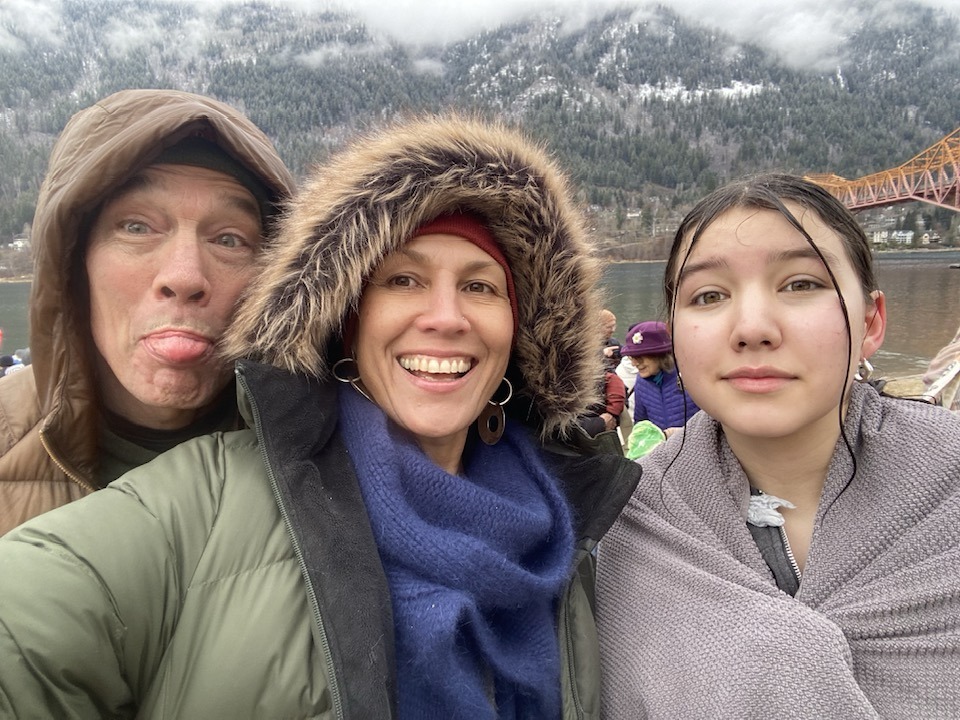
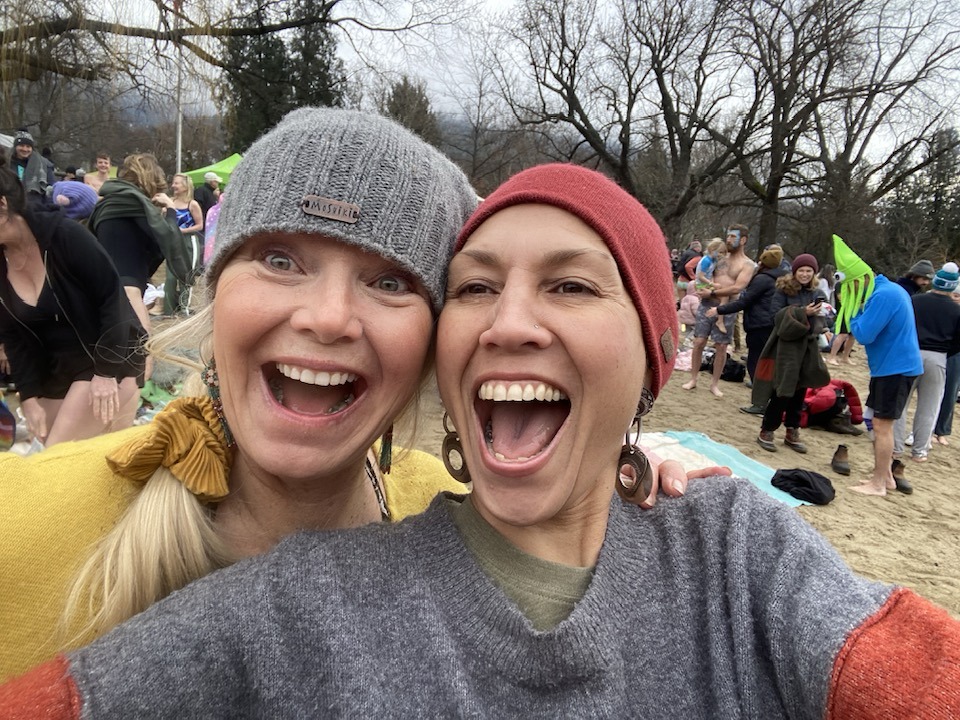
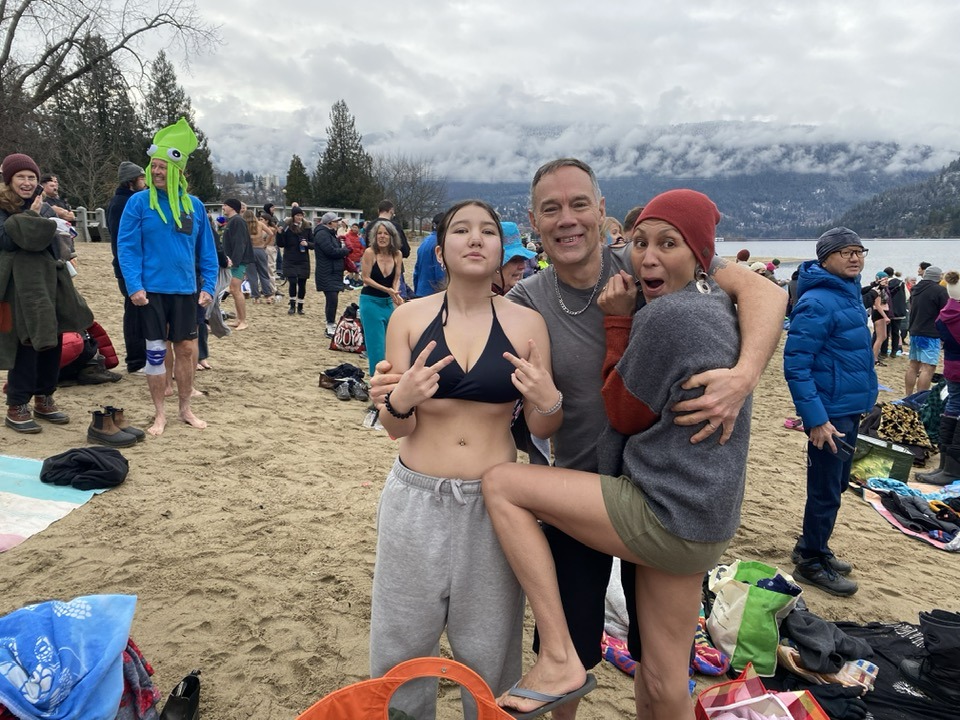
Albeit the middle of a Canadian winter, the beach was devoid of snow. While the weather was milder than in other years, I still hopped between my bare feet, stripped down to my bathing suit. A sizable crowd had gathered, many of whom I recognized as seasoned veterans, shrieking with excitement. Da danced around in his bathing knickers, my husband hollered, Mama was, as always, ready to document with camera in hand, and my teenage daughter grimaced against the cold. Together, we prepared for the plunge, my family by my side.
This was it—we all needed to press the reset button, and this time, I would do it with focused intention. For the first time, I didn’t rush in and out. I took in every step of the way into whatever comes next, and found my way back to shore.
LESSON: WHAT I THINK I KNOW DOESN’T PROVIDE THE KIND OF SECURITY THAT I SEEK.
 LESSONS FROM MY LUMP