YEW ALCHEMY

I’m convinced that open-mindedness is the ticket to an alternative experience. The only way through an obstacle is to realise that a problem is only a problem because of the meaning we have assigned to it. My decision to choose chemotherapy as my medicine meant believing in it fully, getting behind my choice 100%. The alchemy lives in the power of decision and choosing to trust the path regardless of where it may lead. How we respond to life is the only true power we possess. I keep coming back to the clarity of that yes I felt. That is all I have to go on. No external forces persuaded nor forced me into that yes. It is that effortless yielding that I trust.

I remember the exact moment my trauma of chemo shocked through me. My beloved friend whom I sat with as she chose to die to end her cancer, was terrified of chemotherapy. I remember her telling me that her system was sensitive and that she just knew she would be the one it would affect the worst. She faced her fears, did it anyway and she was right.

She called me from the hospital, convinced chemo would kill her. I held her sobbing, shaking body as her terror filled me up. All we could do was hold onto each other, and in that moment of helplessness, my conviction that chemo was evil solidified. I swore to myself that I would find another way to heal without injecting poison into my body. I would never enter the dreaded chemo room and hook myself up to something that intentionally made people sick.

My healing journey has given me the opportunity to truly examine how belief systems I’d created could pigeonhole me, how my determination and stubbornness could render me deaf to guidance that was gently showing me another way. Time and time again, I have experienced grace when I loosen my grip on what I think I know. When I collide with fear, it is the fear itself that needs to be questioned. What is its source and what have I given power to? I’ve come to trust that light will enter when I open my mind to let it in.

I am learning to become like the Fool in the tarot deck. He is zero, belonging to no sequence. A nothing with everything, standing at the edge of a cliff with gleeful conviction, about to step into what cannot be seen. He continues on his path carrying almost nothing, even as his next step appears foreboding to everyone but him. His heart remains open to the journey. He holds a white rose between his fingers — a symbol of the innocence, purity, and beauty with which he moves through the world, unconcerned. He is not alone. His loyal companion, the white dog, trusts him completely. Animal instinct senses no danger abound, only the joy of following a friend. To release what I think I know is to fall off the cliff and believe I will land in grace.

When I eventually reached the point of finding myself in the chemo lounge last year, hooked up to multiple clear bags, I was able to accept it because it wasn’t chemo. It was a manageable step, knowing that what was going into me was not poison, but a blocker meant to stop feeding my cancer cells. I used that time in the chair to write and to re-frame it as my creative space.

Through monthly visits over the year, surrounded by genuine, caring nurses I came to know by name, the act of returning again and again to that green vinyl chair transmuted what I had once perceived as a hell space into a place of unexpected communion. I bless my liquid medicine bags with my willingness to let it be just that. I learned how to receive love from the most unexpected of places and also how to share it — through quiet conversation, a warm smile, or shared understanding with others finding their own way back toward wholeness. It no longer represented an electric chair, but a throne I sat on willingly.

There were two yew trees we needed to uproot on our property. Their roots would eventually infiltrate the foundation of our home. I am not a green thumb by any means; my approach is to plant something, give it the bare basics, and let the rest be up to the plants and trees to survive if they are meant to live with us. It felt wrong to dig up those young yew trees and dump them in the forest. My husband drove up the mini excavator to dig a couple of holes on the side of the mountainous hill, to stick them back in the ground and give them a fighting chance.

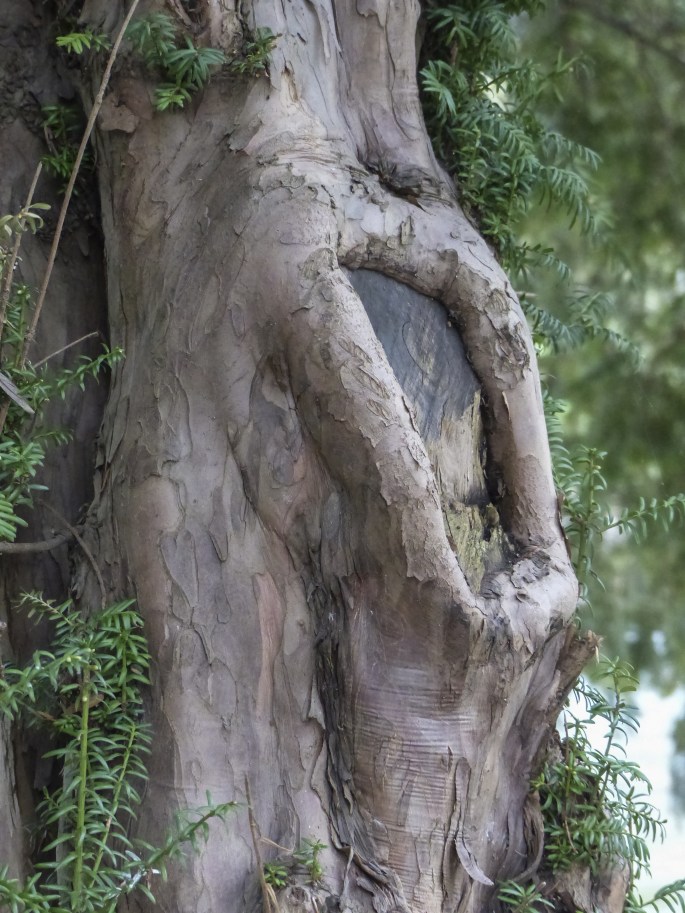
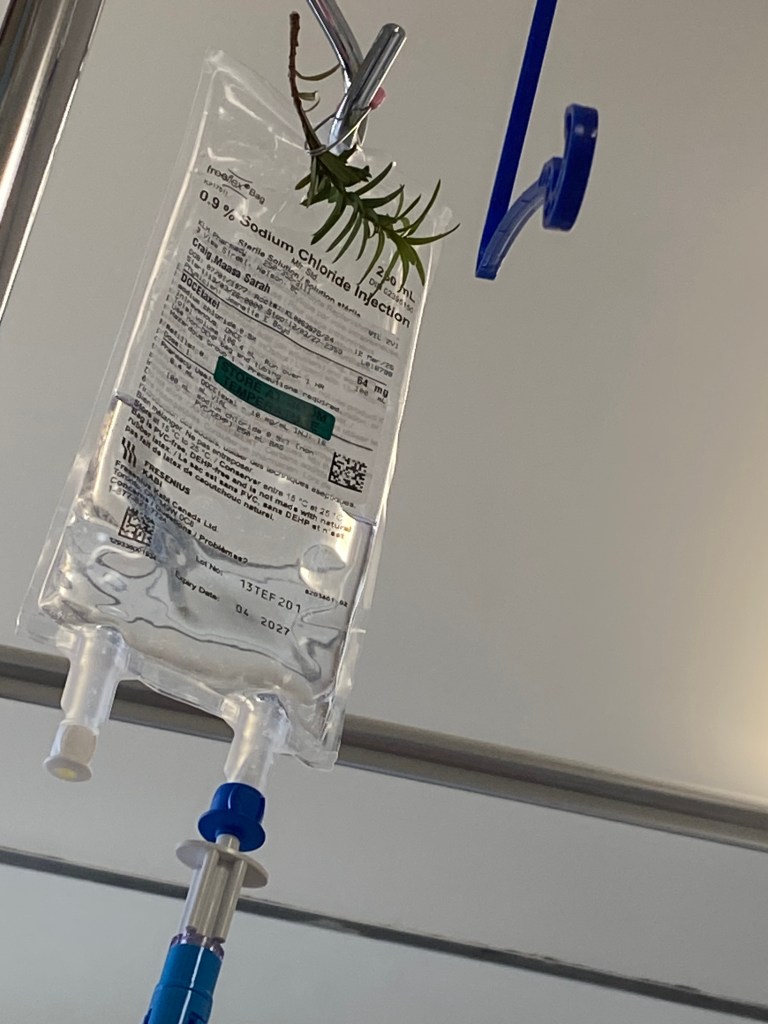
They not only survived, but made an ally of the unforgiving, hardened incline of earth and even grew. They look a little haggard, yet seem rooted to stay. On the morning of my first chemo round, I went to visit the trees. I wrapped my hand around a still-spindly trunk and held on tight, praying that their resilient spirit would enter me and ignite harmony and order — guiding my rogue cells to remember their original design, to forget what they had become, and to rejoin the remarkable synergy of the healthy cells around them. I asked permission to take a small needle branch with me, prayed over it, and tied it to my chemo bag. I sank into the chair and accepted the yew medicine, straight from Mother Earth and into me with welcome gratitude.

The yew tree is among the oldest and most resilient trees on Earth, having stood the test of time. Indigenous peoples have used yew medicine for pain and healing long before modern science isolated and studied its medicinal compounds. This extraordinary tree is a manifestation of holding paradox as its innate intelligence: it is one of the most toxic trees on Earth, producing poisons that can kill in its needles, bark, and seed- yet it is that very poison, alchemised into medicine, that has allowed it to exist for thousands of years, even through radical environmental changes and threats. The poison is what keeps pests, fungi, and disease from infiltrating its growth and survival.

As the yew grows older, its centre becomes hollow. The heartwood rots away, yet the branches continue to be nourished and thrive. This is a powerful symbol of emptying out, of letting go in order to become stronger. Like my tumour, which needed to rot away as a process of survival.

In Druid and Celtic traditions, yews were often planted in graveyards not as symbols of death, but as guardians of transformation. Like the hollow within the tree, the parts of ourselves that decay create space for renewal. New growth emerges, making way for what continues on, where the death of one part of us becomes the beginning of the next.

The same toxins extracted from the needles of the European yew tree that ensure the long-standing survival of these ancient trees now enter through my vein. At the cellular level, their intelligence interrupts the rapid, relentless, chaotic division of egoic cancer cells. It halts the process of division, preventing them from replication and dominion over me.

Docetaxel is a medicine best known for its success with various types of breast cancer, with predictable, well-established results since the 1990s. At a cellular level, it carries the yew tree’s wisdom directly into the human body to bring order into chaos.

If it weren’t for my open-minded approach to accepting this as my medicine, I wouldn’t have given an iota of attention to researching what it was made of or what it did. I had invested years in this healing journey, researching countless alternative ways around conventional treatments. My determination was stubborn and strong, and it fuelled my spirit to walk the road less travelled. It empowered me and taught me a great deal, but looking back, I had bet everything on being right. 

My powerful drive to avoid chemo at all costs led me through the darkest phase, one that came with excruciating pain and required me to mask the quiet terror brewing beneath my outer confidence. Going through that equipped me with the strength to get through just about anything. But now I know I don’t have to work so hard to be strong, because that strength is already inherent within me and I don’t need to fight for it. It comes from being the fool who follows the Holy Spirit in the freedom of admitting that I really don’t know anything.

I had made a giant stride by giving the infusion lounge a new meaning. Now the time feels ripe for my trauma around chemo to be healed, not just for myself, but for my sister too. Maybe as I accept this as my medicine, the utter helplessness I felt watching her can finally be hollowed out and released. In that way, we can both alchemize our fears into peace, and perhaps it reaches further backwards and forwards in time and space to help others too.

As I sit here writing this, it has been 3 weeks since my initial dose, potentially the first of eight. I’m due for the next one this week. When the initial yes to proceed with treatment came, it arrived with another clear message: begin with a half dose. This was confirmed by an oracle card my friend pulled for me, my heart welled up with gratitude for that guidance. 

Often, these strong medicines are given at the highest standard dose and adjusted only if side effects become intolerable. I suppose even with my yes, there’s a bit of wiggle room, and that feels just right. I brought the idea to my oncologist, proposing three rounds at half dose followed by a PET scan to assess whether it was working. She agreed. When healthy cells are caught in the crossfire, it matters to know the treatment is actually effective, and even at half dose, we should see measurable change. Easing in gently felt like the right way to honour a yes I had resisted for so many years.

I don’t know whether it was the shift in my mind, beginner’s luck, or the yew alchemy working synergistically with my system, but I have managed to carry on with my life these past week. I’ve even gone as far as believing the yew medicine has gifted me its superpower, giving me extra energy not only to heal, but to continue with my workouts and massage practice. Thankfully, the roots of my hair follicles are still hanging on tight — although after all this, what I struggle with most is the impending possibility of losing my thick, wild, and curly hair after I finally got it back. I tend to my humanness while reminding myself that ultimately, I am not my body.

The most notable disruption has been digestive. When I mentioned having to run to the bathroom numerous times to a friend who had also been through chemo, she laughed and said, “Oh yeah, never trust a fart when you’re on chemo.” She saved me that day. I had felt the heebie-jeebies creeping in — dark thoughts about my mortality infiltrating, arriving alongside a more noticeable increase in pain around all the sites the PET scan had flagged for cancer activity.

I have been diligent about watching my mind, warding off frightening thoughts by meeting them with more powerful, eternal, and unchanging ones. Sometimes it takes a great deal of convincing and determination to make those thoughts stick. But that is the practice, and that is my life. It is one thing to hold a belief intellectually. The act of alchemising belief into something that can uphold us asks that we stay in the light even when darkness approaches. To keep looking for it, to tend to it even when it is barely a flicker, and even when it goes out entirely, to trust that somewhere beneath all the woes of the world, the light remains. And that is enough to get it lit again.
POLKA DOT ORANGE LIGHTS

“I’m happy about your results,” my oncologist says over the phone. She’s relaying the radiologist’s report from my recent PET scan. I’m surprised by the felt sense of release, even though I had convinced myself that this time I wouldn’t let it get to me. I wouldn’t let the anticipation of the result become an invisible weight I carried. But it was still there. The difference is, I’m stronger now, and I can carry it without letting it drag me down.

Still, my light-as-a-feather release moment was short-lived. My quick translation of what she said was, “I’m done, I’m cancer free! Whoopee! Finally!!” But then she proceeded with what I didn’t want to hear which meant: it ain’t over yet.

The Coles Notes version is that there are lumpy remnants of disease bound up in my scar tissue. There are still a few small nodules left over from the breakdown of the big tumour. I focused on the positive: it’s no longer in my other breast, sternum, liver, lymph nodes, or in the suspicious activity that showed up in my right lung several months ago.

“There is a new lesion in your spine at T4 that we are going to have to keep an eye on,” she continued. It’s a game of give and take, and what is left over is where I have to count my blessings. My mind quickly grasped for an explanation.

I had two terrible falls last year where my heels went over my head and I smashed hard onto my back. Both involved slipping and landing on solid slabs of wet rock. The first time, I broke my fall with my left arm, which fractured my humerus and left me with a frozen shoulder I’m still patiently thawing out.

The second time was a classic ass-over-teakettle slip down the stone steps to my garden. That time I remember lying there motionless, afraid to move, praying that I hadn’t broken my back.

“Could a fracture or major trauma in that area cause a higher glucose uptake in the scan?” I ask. I can hear the desperation in my voice and feel my heart squeezing around panic. “It could,” she replies, “but the formal report says that it is likely a metastasis.”

This is how it starts: fear finds a crack to get in. If I look away and let it in, it will take hold—and that is what metastasizes and spreads. That is what alters my experience from being free to becoming a prisoner. I know I have to nip it in the bud—not with denial, but by shifting my awareness to a greater Reality that will guarantee my safety.

This is the thing: the radiologist is commenting only on the supposition in cases like mine. The last PET scan was done over a year ago, when the orange glows of sugar uptake in my report were polka dotted in too many places. Assuming that cancer “spreads,” all the orange glows led to the presumption that it was all cancer — even though healing tissue also takes up sugar. This is my own disclaimer on these super sensitive machines that pick up everything. I was never completely sure that was the case, but I didn’t want to biopsy bones and organs, so I went along with it, hoping it wasn’t as bad as it seemed. It was most likely denial, but at the time, it was the only defense I had to keep going.

The radiologist comments on my scarring as a “surgical site,” which it is not. The scar tissue was not from a clean cut surgery. I wanted him to know what I endured—that I didn’t have the option for a quick and easy removal of my problem. It’s more like a mesh of healed tissue from a decomposition site. I find it mildly annoying that the guy writing this report has no idea what I’ve been through and writes without considering my falls as a possible explanation for the T4 light-up. I recognize my annoyance is guarding what I want to keep safe, so I let it go with my next out breath.

My oncologist is thorough and pulls up the last three PET scans, spanning two years, to compare them on her screen. “Maasa, you really should see the changes in the imaging. You can literally see those orange globes of light around your body dissipating with each scan. I think you would feel really encouraged if you could see what I see,” she says. I love this woman, especially because she wants me to just keep doing what I’m doing. And even though there is no real end to talk about in terms of treatment, I decide that this is good news—because really, it doesn’t change anything. I can keep living the way I am.

I had decided I wouldn’t live suspended on “what ifs.” There will be more tests, and the only constant is change in whatever direction life flows, so I’m training my mind to anchor to what is steady and forever. It’s ongoing daily work — practicing permanence in a world that only guarantees impermanence.

I was nervous when I signed up for a workout class that I used to do in my twenties. I’d been feeling the nudge to get strong, to push healthy oxygenated blood through my system for a house clean. To feel those endorphins combat the restrictions in my body, to be told what to do by a guy that inspires me.

Coach tells me not to ask questions and just do what he says. That is exactly what I need: just show up, do the work, and get on with it. I survived the first week of a strenuous, sweaty workout, which confirmed for me that so much of how I feel depends on the limits I place on myself. Sure, I have to modify here and there, but my body followed the state of my mind that chose not to let anything get in the way.

My monthly treatment in the chemo lounge was right after class on Friday. My veins were so pumped that, for the first time, the nurse couldn’t get an IV into me. It gave me a funny sense of satisfaction—even though it hurt to have her poke and prod until I finally relaxed and let her in.

It’s helping my mindset to know that the cocktail of two drugs for my targeted therapies does not damage my healthy cells. Instead of attacking fast-dividing cells like chemo, they target and block the receptors that fuel the cancer cells. The hope is that, without fuel to grow, those unruly cells will weaken. With me strengthening my own immune defense through everything I’m doing—mostly mindset, herbs, supplements, and exercise—they may eventually remember their true function and return to behaving like healthy cells.

My life can easily be defined by tests and the shifting statuses of this disease. What I’ve learned from the latest PET scan is that I’m still reaching for the finish line — and I don’t want to be in a race. My path is the one I’m on, and anticipating it to be any different will only cause me grief.

Tests come in three-month increments. Thankfully, the next one is an MRI, which I requested because I need a break from the radiation of these nuclear medicine machines. Rather than reaching for a different kind of life or pinning my hopes on a better scan result each time, I’m practicing being here now — finding perfection even in the nooks and crannies. To be an expression of the good stuff I want to share — and for the rest, I place the future in the hands of God.

DON’T ASSUME ANYTHING

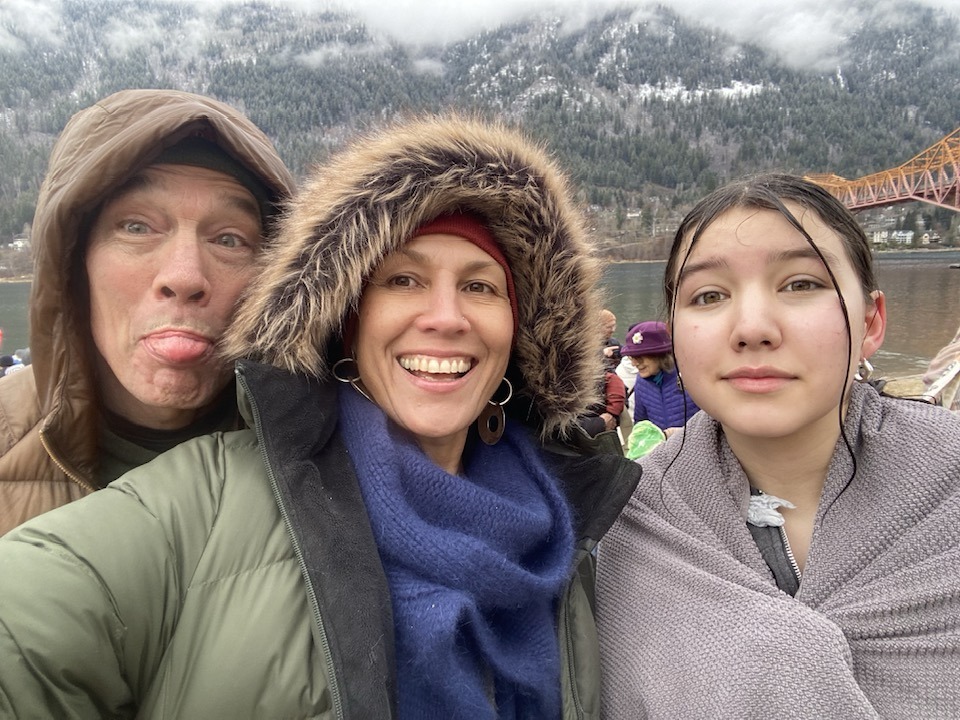
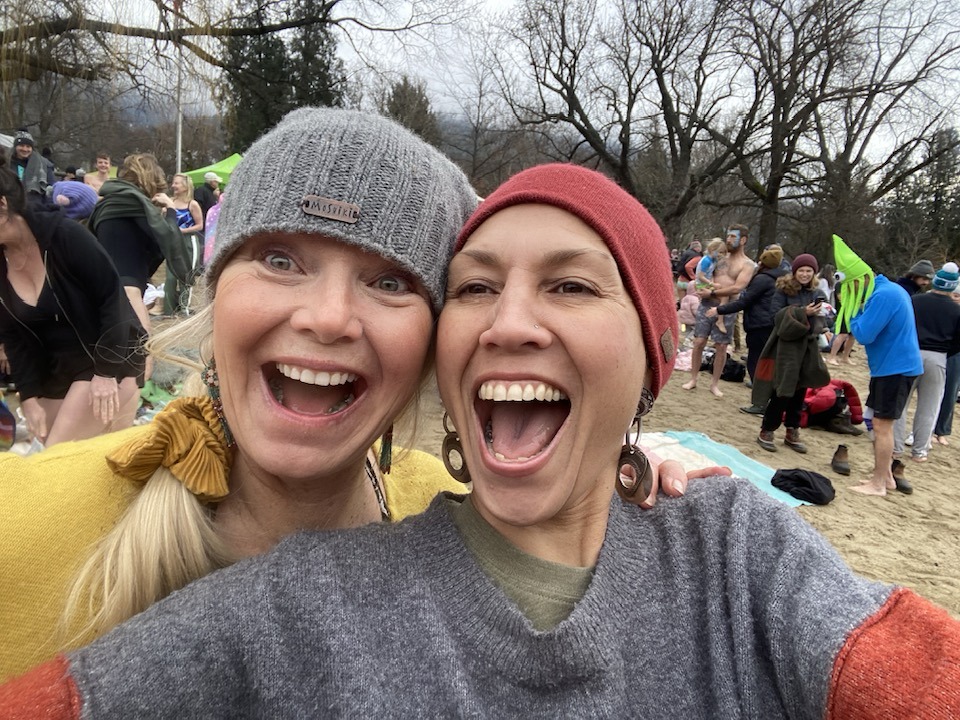
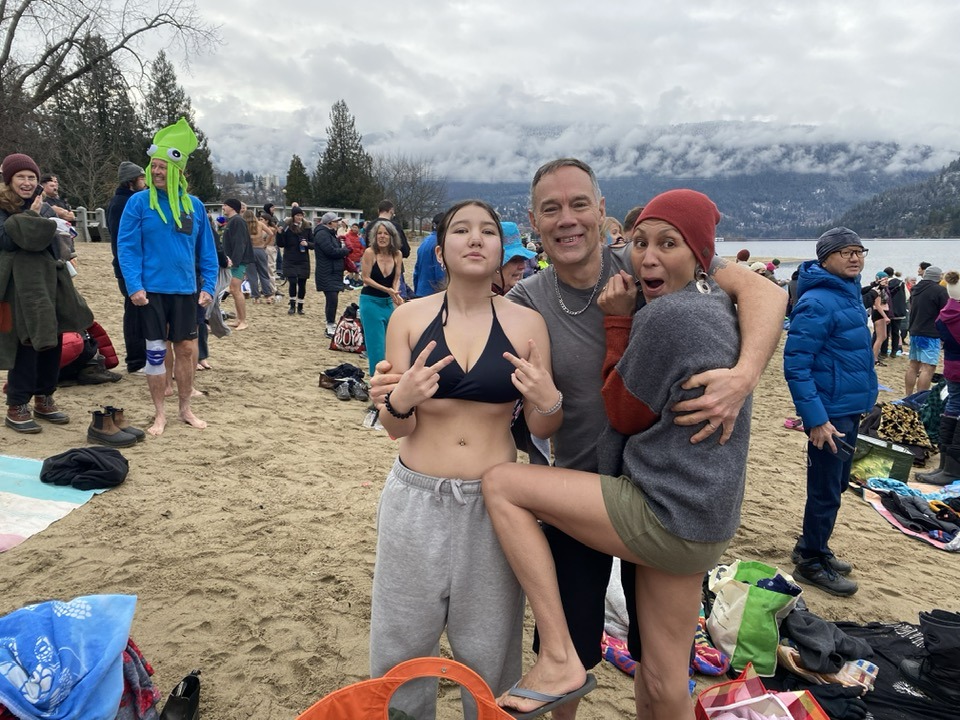
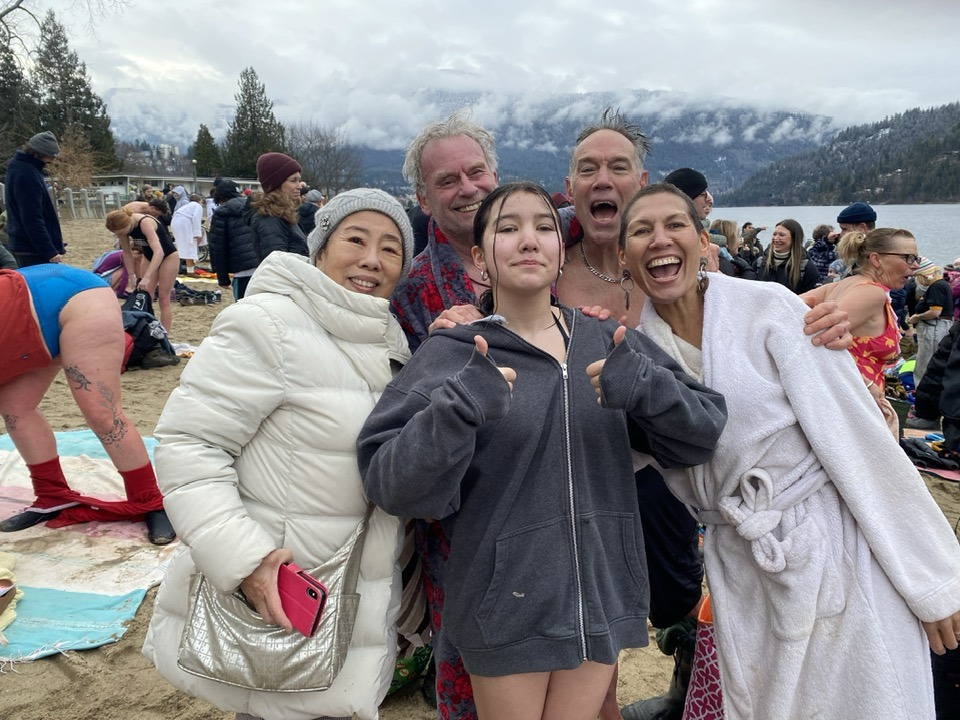
As I sauntered into the frigid water amidst the flurry of screams, splashes, and gooseflesh, I was reminded of the simple yet profound lesson: don’t assume anything. The annual polar bear dip in the lake has become the only real symbolic tradition our family shares.

It began during the debaucherous phase of my husband and my early courtship over two decades ago. Still thoroughly inebriated from the epic party of New Year’s Eve, we impulsively jumped into the bone-chilling glacial waters of Kootenay Lake, desperate for a cure from our horrible hangovers.

Unbeknownst to us at the time, this impulsive act would evolve into something far more meaningful. What started as a way to rid the debris of toxicity transformed into a symbolic ritual—clearing the slate for a fresh start each new year. I had so much to release from the most challenging year of my life.

Leading up to the grand event, I was still pleading for respite from the debilitating pain induced by my chronically infected wound. It was outrageous to even consider jumping into a lake already laden with bacteria, made worse by a slew of people transforming it into a cesspit of infection-loving agents. Not to mention, I was on standby for a palliative mastectomy, which wasn’t for a curative cause but rather a necessary step, with its own unknowns, in order to proceed to the next phase of treatment that would hopefully nuke the cancer.

I had reached—or so I thought—a stalemate with my eight-month ordeal of enduring the gruesome ulceration of my tumour. Only in hindsight can I see the blessings hidden within periods of doubt, suffering and fear. I wouldn’t have been eligible for surgery if not for the recurring infections. I wouldn’t have started the new treatment had my cancer not mutated into a different kind. I was ready to let go, my hands open.

But my hands gripped, white knuckled in the darkness. At night, my trust waned, smashing against fears and contradictions of my own making. My heart raced with the terror of losing parts of myself. What security was there in what I was willing to give? My mind fought, freaked, and froze around runaway thoughts that I could not control. Would I regain mobility in my already compromised arm? Would I be left with a Frankenstein version of my current wound, along with a donor site that might not heal properly? Would my cancer run rampant? Death lurked close by, and faith was but a whisper in my shallow breath.

With a new day and along with the light, I pray to strengthen my trust in letting go. The more I release the need to control and arrange the world around me to feel safe, the freer I become to recognize the path unfolding for me. I’m learning to trust this way because I feel at peace with the next step—only as it unfolds. When I analyze and weigh my options, mingling them with combative emotions, all that happens is that I go around in vicious circles. Decision making brings only anxiety and uncertainty. I cannot be trusted operating from this place.

In my right-mindedness, I see how my perceived safety net is hooked onto anchors that aren’t secured deeply. My constant attempts to rearrange and stay on top of what I’m trying to control only make the net tremble, precariously holding everything together.

This is why A Course in Miracles teaches me to let go of what I think I know and offer my free will for guidance—to see beyond the mind I have constructed and trust in what I don’t yet have the capacity to understand. It’s a big ask, one I often meet with resistance: to take responsibility for all that I don’t want to feel, while finding empowerment in giving up what I’ve given power to.

The help I’ve received has come in ways I could never have planned or imagined for myself. My nemesis, the staph infections that prevented me from getting chemo, instead allowed me to receive the gentler targeted therapy portion of the IV cocktail.

I never would have imagined that one treatment of the targeted therapy would reroute me into the lake. By the time the surgeon called me back just after Christmas, my wound had transformed from an angry, oozing mess into something that actually looked like it was healing. Before I could share this update, he gravely explained that I would need invasive surgery to remove my breast, cut into my pectoral muscle, and go deeper into the chest wall. This would be followed by extensive reconstructive surgery requiring specialists. I’d have to carve out parts of myself to remake what had been taken away—all with the looming risk of poor healing or the cancer compromising me further.

He was surprised and excited when I told him that my wound looked better than it ever had—that it actually seemed to be closing with healthy tissue. For the first time in over a year, I no longer needed morphine to manage my pain! He agreed that the best path forward was to get on with treatment as soon as possible.

My path continues to twist and turn in surprising ways, reminding me that a higher working order is in play when I choose to trust. The onslaught of antibiotics for my infection had concerning repercussions on my gut. When another three weeks passed, I received the same unorthodox treatment without the harsh chemotherapy. Truth be told, I’m still terribly afraid of chemo. Even though the infection and gut issues looked horrible from the outside, on the inside, I felt as though I was being gently guided to not be afraid.

The genetic testing result I’d been waiting for over two months might be ready before the next round of treatment. Knowing I have a good match would give me the courage to shift my perspective and fully accept chemo as medicine, not poison. I’m placing my trust in divine timing and also leaving room to have no set plan in place.

My practice is to remember to stay open, even when I feel the urge to close tightly around all that is precious to me in an attempt to protect it. There is a paradox in handing it all over, where freedom intertwines with the terror of letting go, until the moment both hands open. I keep coming up for air on a regular basis. I forget, and then, by the grace of God, I remember that life cannot be truly lived while fearing the loss of what we love. A Course In Miracles teaches that Love is the absence of fear.

I’d triple-secured waterproofing over what was left of the open wound—an upside-down heart-shaped opening where my breast used to curve. Below it, a bridge of healthy tissue between another meaty section that’s shaped like a semicolon. The deep, long and narrow bottom of the crevice, prone to infection- hidden for months, had finally widened and risen to the surface to dry out. I couldn’t even remember the last time I’d fully submerged in water.

Albeit the middle of a Canadian winter, the beach was devoid of snow. While the weather was milder than in other years, I still hopped between my bare feet, stripped down to my bathing suit. A sizable crowd had gathered, many of whom I recognized as seasoned veterans, shrieking with excitement. Da danced around in his bathing knickers, my husband hollered, Mama was, as always, ready to document with camera in hand, and my teenage daughter grimaced against the cold. Together, we prepared for the plunge, my family by my side.

This was it—we all needed to press the reset button, and this time, I would do it with focused intention. For the first time, I didn’t rush in and out. I took in every step of the way into whatever comes next, and found my way back to shore.

THE HOLY INSTANT


There is profound grace when we are able to respond to life in ways previously unimaginable. Within this newfound awareness and understanding, the vantage point from which I operate shifts to a new perspective.

In my personal journey, the Holy Instant, as described in A Course in Miracles, has consistently unfolded in ways beyond my assumptions or imagination. It arrives in divine timing, clicking so perfectly, when least expected, and I’m finally able to exhale completely. It’s like a surprise opening of a portal, revealing an entirely new way that echoes the faith I put into it.

There is no greater sense of security than receiving confirmation that I’m not operating alone. Miracles happen when this powerful force co-creates with us in both mysterious and unpredictable ways, and, most importantly, when we become aware of its workings. It’s an instant when we see how we’ve been stuck and what it takes to be free. This revelation always comes in ways we could not have fathomed due to the confines of our minds and past experiences. That is why it is Holy — because it has the ability to transmute fear into clarity which proceeds with the kind of peace that trumps everything else.

This is what I experienced after I finally let go. My healing journey in essence, has orbited around my self awareness and the lack of it. My struggles always seem to precede resistance, and the support or shift in awareness occurs when I am ready to let go of something.

The last bout of supreme struggle originated from a conversation with my husband. Over the past couple of months, we had been haunted by the implications of the seriousness of my condition. We took turns having meltdowns, and it was particularly challenging when we wallowed in the mess together.

It’s another day where cancer has hijacked the lead role of my life. My husband is sitting at the foot of the bed as we are about to have a conversation that can go any which way. I had strung together previous days consumed by frantic internet searches. I needed an alternative, any other way than the direction I’m headed. He is choosing his words carefully, but they are shaky behind his emotional plea. Suddenly, I am violently annoyed that he is crying as he asks me to consider chemo. ‘Stop crying!’ I snapped.

In that precise moment, something miraculous occurred. I could observe my behaviour from a distance, recognizing how my reaction to his request stirred the fear I couldn’t or wouldn’t confront. It made me angry and cruel. Acknowledging this allowed me to stop reacting so I could truly listen to my husband. As he spoke, I felt the iron door of my firm “no” starting to creak open. The annoyance dissipated, replaced only by love for this man who has steadfastly stood by me throughout this unpredictable healing journey. What he was saying began to make sense to me, marking the greatest miracle of all.

I believed that surrendering my breast was the necessary sacrifice for my healing. It took years to get there, but when I finally did, ironically that option was not made available and suddenly my situation spun out of control. Despite the chaos, I’ve uncovered the truth that I would much rather be disfigured than have chemo in my body. This is why I have suffered tremendously as my options began to narrow pointing towards chemo.

Where did this rigid aversion come from? When I delved deeper, I recognized what was longing and ready to be healed. It became clear to me that my experience with chemotherapy constituted a profound trauma that demanded a sober and thorough examination. The aversion to confront it served as a clue, indicating the necessity of revisiting this painful chapter—not by the person it happened to, but by the person who now has the choice to perceive it differently.

I’ll never forget feeling her terror in my bones as I held her. My beloved friend was certain that the chemo was going to kill her. The strength and convictions that carried me through my own healing journey shattered as we fell into the abyss of terror together. In that moment, my psyche marked that experience with a formidable sign: ‘Do Not Approach – Extremely Dangerous, and Certain Death!!’ Her death cemented that signpost so I would not forget.

Understanding the root of my fear gave me the ability to surrender it to the Holy Spirit. If it hadn’t been for that initially charged conversation with my husband, during which I woke up to my reactivity, I would have missed the opening of the portal. Now, I’m presented with the opportunity to perceive it as her unique experience, distinct from mine and from the experiences of many who have been saved by chemotherapy.

I ceased my frantic, desperate search for external answers and turned towards a new ‘yes’ within myself. It took less than 24 hours for the response to my “yes” to come via phone call on a Friday evening. I was surprised that the surgeon who denied my mastectomy was on the other end of the line.

The first time I faced this surgeon, my prepared questions dissolved into sobs. I tearfully revealed a history of trauma with male medical figures. “I’m so sorry, I must be making you very uncomfortable right now,” he empathetically said. He has kind eyes behind his mask and somehow I was able to bridge the gap so I could hear him say that I needed “systemic treatment”.

Over the phone, he tells me that he’d reviewed my recent biopsy report and discussed my case at a panel with other doctors. Present was my soon to be oncologist whom I’ve discovered to my relief is a female doctor. Could she have possibly taken my case influenced by what my surgeon knew about me? I can interpret this as nothing or as a result of the Holy Spirit’s work in my life.

The biopsy confirmed Ductal Carcinoma, now in the intermediate to advanced metastatic category. Hormone receptor positive, it thrives on estrogen and progesterone but is HER2 negative. I’m told that this is considered a less aggressive form of cancer compared to others, but i’m too nervous about what he’s about to say for it to register.

Bracing myself for the anticipated treatment plan, the surgeon surprised me with unexpected news from the circle of doctors. It caught me off guard because their recommendation was not the expected chemo or radiation; instead, they proposed starting with hormone therapy.

When hormone therapy was suggested to me in the past, I looked at all the potential side affects and declined treatment. After navigating through all the recent challenges, facing and accepting what seemed inevitable, and preparing to let go, a completely unexpected option surfaced, altering my reality.

I had firmly believed that chemo was the only logical next step, especially when the surgeon ruled out radiation as a viable option for me. After accepting chemo and the challenges I was willing to face, hormone therapy is a step that I know I can take. My hard “no” from my past has metamorphosed into a “yes” only made possible by the things that happened in-between.

The surgeon didn’t have to call me on a Fri. evening to share what was discussed. He could have left me in suspense for another three weeks, fretting about my upcoming meeting with the oncologist and what it would entail. My case could have easily fallen through the cracks; instead, a dedicated group of doctors took it upon themselves to devise a gentler plan then I expected.

I choose to interpret this as a timely intervention by the Holy Spirit, working through those I least expected. This is how my faith continues to keep me afloat, even when I feel like the sea will swallow me up. I’m being guided to recognize the ways that are not serving me, in ways I could not possibly navigate alone.

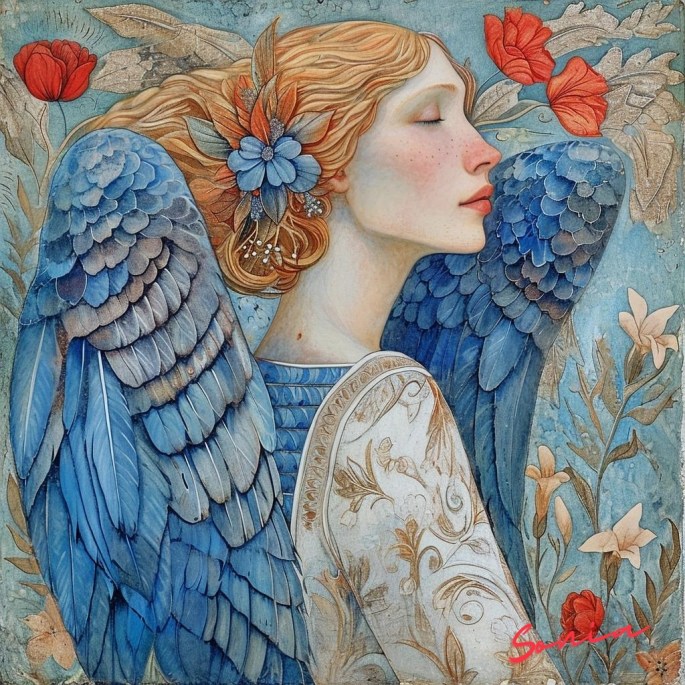
A.I. art by my mama Sonia Aichi. To me, she depicts the kind of peace proceeding a Holy Instant.