BATHING RITUAL

I’m watching blood trickle out in a steady stream, flowing down the curved contour of my breast and marking my torso. The crimson liquid bridges the realm from inside to outside, flowing from the large, mutant opening of my lump that resembles a miniature exposed brain. I notice a slight rancid smell of decomposition which quickens my heart rate so I distract myself by watching the flow. I’m in awe of how it keeps moving, assisted by force and gravity, into the bathwater, tinging it a slightly amber colour.

When we built our home, a big bathtub seated in an open space was at the top of my wish list. I meticulously laid out every tile surrounding the tub with slate, and we crafted a step into the tub from an open-faced timber slab. Ammonite fossils adorned the tiles, connecting me to ancient times and adding a personal touch to my sanctuary.

My evenings involve soaking in water that’s a little hotter than initially comfortable. I love letting the heat sear away the residue of the day, watching my skin redden against the wet heat. Perhaps it’s a Japanese trait ingrained in me from a culture that appreciates bath time as a ritual for rejuvenation, relaxation and cleanliness.

In Japan, public bathing in bathhouses with an assortment of soaking pools of various temperatures and qualities is woven into the culture. It’s a communal activity that fosters connection through the appreciation of a therapeutic soak. Both Sento, public bathhouses found in most neighbourhoods, and Onsen, which are fed by natural hot springs and often feature beautiful outdoor soaking pools, involve etiquettes and rituals. These are based on respect and tradition.

Going to the sento with my family stirs memories of early childhood, a time before I became self-conscious. I would alternate between going into the ladies’ side with Mama and the other side with Da until I reached double digits in age. Upon entering the bathhouse, I was greeted by the familiar fusion of aromas—mineral-rich water, herbs, soaps, and beauty products. An invitation to wash away the day and relax with strangers, buck naked.

At the enterance, there was a small booth where the person on duty collected our fee, which was a few hundred yen at the time, equivalent to about three Canadian dollars. The person was seated in the center of the division as the sole onlooker on both sides. My mom joked that whoever applied for that job must like looking at naked bodies. Naked bodies were a source of curiosity and quiet amusement for me.

I had no qualms about stripping down to reveal the stronger traits of my Caucasian DNA. I was accustomed to being stared at, even when clothed, simply because I didn’t look purely Japanese. At that time, with my spindly long legs and flat chest, I felt no shame and considered myself Japanese through and through, having been born and raised in the Land of the Rising Sun.

On the men’s side, It was amusing to observe the assortment of uncircumcised appendages of various shapes and sizes, though I made a point not to stare. Da, with his pale moon-white upturned arse perched on his long carrot legs, Scottish red hair, and his mushroom-tipped ding dong, drew most of the attention before they noticed the half-breed of the opposite sex in tow.

We knew the public bathing etiquette well and did our preliminary wash using the deep basin of luke warm water at the entrance of the large tiled bathing zone. Moving on, we selected our bathing stall from the lineup, each equipped with a seat, mirror, small basin, showerhead, tap, shampoo, conditioner, and body soap. Before sitting down, we ensured to clean the low seat of the plastic stool thoroughly. We proceeded with our detailed scrub down before choosing our first pool to melt into.

There are warm baths, hot baths, even hotter baths, herbal medicinal baths, detox baths, chilly baths, electric baths, and even outdoor baths at most onsens. I used to dip my toes and maybe even submerge my whole foot in the electric bath before chickening out, remembering the old lady who had a heart attack believing she got electrocuted.

Bath time for me is a ritual carried on from my childhood. I was gutted when I was told I could no longer soak in the bath—unless I poured a half bath and sat upright so my breast would float safely above the water. I couldn’t risk another staph infection from bacteria lurking in still water. Begrudgingly, I took to showers because it was too much of a tease to get in the bath without being able to slink back into a full relaxation pose, submerged, with my outstretched legs and heels perched on the opposite end. But after an exhausting day, I opted to at least give half my body the release it needed and witness the extent of my bleed.

My ongoing practice is to create a perspective that supports a harmonious state of mind. I felt mixed emotions of wonder and alarm about the volume of blood coming out of me. My Da, a doctor of Japanese acupuncture told me that Shaketsu or bloodletting is a practice to release blood out of a blocked meridian. A medicinal treatment to maintain health so I decided that is what my body is doing all on its own.

I remind myself that living in Canada, with readily available healthcare, is truly a gift. When I’m ready to get out, I call out to my husband for help to avoid getting blood everywhere. On the vanity across from the bathtub sits a basket filled with saline for cleaning, packets of antiseptic wipes, gauze, skin prep pads, blood clotting gauze, antibacterial silver mesh, and plenty of high-quality bandages designed for serious wounds. These were all provided to me for free by the local wound clinic, along with instructions from a nurse on how to care for ‘my little exposed brain on my boob.’ I can get more of whatever I need for as long as I need it. Today, I choose to be patient, curious, thankful, and keep my sense of humour intact. Today, I choose to count my blessings.

In Kyoto, Mama pregnant with me, and Da in his geta (traditional Japanese wooden sandals) and Scottish beard, which he kept until we immigrated to Canada.

THE MIDDLE WAY

My first call to action upon waking on Mother’s Day was to reach over to my bedside table, gather the orange bottles of opiates, and put them away out of reach. It was a conscious decision to let go, a psychological statement that I didn’t need them anymore. I had relied on those pills to get me through intolerable nights of pain. As I placed them in a drawer in the bathroom, my sense of liberation from dependency was tinged with the fear of possibly needing them again.

I had strung together a few weeks, delighted by my capacity to accomplish what I could not fathom only a couple of months ago. I moved my parents into their new home, spending three full days proactively creating the next rendition of their sanctuary. I noticed that my pace in approaching life is much slower yet more meaningful, and with this approach, I managed to get more done in a day than when I used to run around like a headless chicken. Time bends when I’m synced in the moment.

My heart stalled in anticipation when the doctor called to discuss my most recent PET scan result. The test would indicate my biological response to the initial three months of treatment. I’ve noticed that I’m much more cautious about trusting my own experience now. Cancer has taught me that I am not the one in charge—that clinging to any rigid way of thinking or being will become a trap. In order to continue on this path, I must always leave room to pivot. If I cling too hard, I won’t be able to let go and flow with what is happening.

I had to repeat what she said to anchor the meaning. ‘One of my tumors shrunk by half?’ I asked. ‘Yes,’ she replied, ‘it looks as though you are responding well to treatment.’ She continued to explain that the spread in my sternum, pec, lymph nodes, and chest wall had all shrunk in varying degrees. Additionally, she noted that the numerous suspicious spots in my liver and lungs appear to be inactive. ‘We certainly have to keep an eye on your liver and lungs, but all in all, this is good news,’ she said. Beyond the positive news, I nestled into the relief that I could trust the signals my body was giving me. It’s as if I’m also healing the part of myself that feels like I don’t know anything anymore.

Finding the middle way in response to life has proved to be effective in navigating all this. In respect to who I am, it’s important to still have a ‘w’holistic approach with an eagle eye expansive view. I’ve followed the doctors’ advice to forgo supplements, herbs, and protocols that stimulate my immune system while I acclimate to treatment. However, these powerful drugs I’m taking have potentially concerning long-term side effects that I want to address. Now, it’s time to adopt a collaborative approach to assist healing while promoting longevity.

The master herbalist I connected with has decades of experience using herbs and medicinal foods as powerful allies in cancer care. When we spoke, I immediately felt a connection. We both agreed on the importance of supporting my immune response while fortifying the function of my organs. She will also be prescribing ‘herbal chemo’ to seek and destroy cancer cells. I particularly appreciated her collaborative approach and her knowledge of pharmaceutical drugs used in oncology treatments. She confirmed that I should absolutely stay on my current treatment plan and strengthen its effectiveness with her protocol.

It’s important to me to be transparent with my oncology team and to receive their support. My herbalist would need regular blood testing to ensure that the herbs are beneficial, a process that my doctors may or may not initiate. As I continue to embrace vulnerability and reach out for assistance when needed, I’ve been overwhelmed by the heartfelt support from those around me. I’m discovering that the more I allow myself to be seen authentically, help finds its way to me in one way or another. Now, I find myself surrounded by a diverse circle of powerful allies – from the experienced professionals guiding my treatment to the unwavering love and support of my family and friends, and to the One listening to my prayers and showing me the way.

After the liberty of pain-free days, the return of what feels like electric jellyfish shocks bouncing around my sternum and breast is a hard pill to swallow. While pain is never welcomed, my intuition tells me that the herbal protocol is working because it feels like the cancer cells are agitated and on the run. It feels like they are contracting and wanting to escape from inside of me. The inflamed, angry cherry on the contour of my breast has opened up, weeping blood and contributing to the burning pain. From the loss of my hair to my lopsided swollen boob with a protruded discharging lump, my ego has been kept well in check. My sense of humour remains intact.

In the spirit of the middle way, I’m leaning on the knowledge of German New Medicine as it now serves as a kind of safety net for me. I’ve learned that the healing phase in any tissue is usually painful, swollen, and messy, much like how a wound heals. Even emotional healing often precedes a messy and painful period. I’m straddling between what I think is happening and who the fuck knows, while conscious of how easy it is to fall into the dark territory of fear. So… I continue to pray. Instead of morphine pills to manage the discomfort, I’m drinking herbal poppy concoctions which takes the edge off and assists me into sleep without the nasty side effects. Currently, this plan is manageable as I ride out this wave.

The Middle Way forges a path between the known and unknown. The practice of finding neutral ground and doing whatever it takes to stay there. It’s about finding balance between what my spirit yearns for and what my body needs. It’s about appreciating my vitality without pushing it too far into expectation, and about not assuming anything while respecting change. Understanding that there is no ‘right’ way to do anything, only opportunities to respond to life without pushing it away or clinging too hard.

THROUGH THE PEEPHOLE

The efforts I fought for months ago have had a ripple effect with a double-edged sword. One edge inflicts deep wounds, while the other cuts out a small opening, a peephole through which I can glimpse a shimmer of gold amid the ashes. Six months ago, the PET scan results hurled me into the ‘metastatic’ category as my liver illuminated with suspicious activity. The impact of this news swiftly plunged me into denial. I sought to reinforce it with my own rationale, other than metastasis, for why there might be areas of increased sugar uptake in the fastest-regenerating organ of my body.

Since cells involved in healing processes also consume more glucose and thus appear brighter in a PET scan, I converted my shock into a more digestible explanation. To gain further insight into my liver’s condition, I requested an MRI, known for its detailed imaging of soft tissue. However, my requests were repeatedly denied on the grounds that the evidence of metastasis in the PET scan was deemed sufficient.

At the time, I wasn’t prepared to accept a treatment plan based on mere assumptions. I fought tooth and nail until my local MD relented under my plea for an MRI. I’m immensely grateful that my care providers have flexible boundaries that stretches open when I advocate strongly for myself. Finally, after all these months, I underwent the MRI a couple of weeks ago.

When the results appeared in my inbox, I leaned on the pillar of strength from my morning prayers. Despite the adversities and hardships that comes with the walk that I am walking, I’m most grateful for the enduring strength of Spirit that holds me up when I’m shaking. I was hoping that whatever was there in my liver would be gone after three months of being on treatment. The new hair growth, return of my appetite, and increased stamina seemed promising signs of healing. Nevertheless, the results revealed at least four nodules in my liver, and this time, I didn’t push it aside into denial or search for alternative explanations. I allowed the truth of what is slam right into me.

I surrendered to the cathartic waves of emotions that surged violently within me, crashing with relentless force. I felt it all without trying to cling, and in that surrender, their progression seemed to hasten. As the initial intensity of this reality settled, I willed my mind to soar high above and gain a broader, panoramic perspective of the situation. This isn’t new information; it’s confirmation of previous findings indicating mutant activity in my liver. It’s clarity that must be accepted—a crucial baseline for the path ahead.

Resisting acceptance will only erect roadblocks on the path I must walk. My journey demands unwavering faith and patience—a continuous dance of fluidity and adaptability. I must navigate my current reality while remaining anchored to what cannot be touched by this disease. I must keep the light of my spirit burning, even when the room goes dark around me. It’s in this choice, available to me, that I can discover gifts in the most unpredictable places.

The gift I received came in the form of a timely call from a different oncologist than the one I usually see. Just hours after I had read the results on my computer screen, he reached out to share his interpretation of the findings—a perspective far less terrifying than my own. He explained that in cancer treatment, success isn’t solely measured by achieving remission but also by stabilization. According to him, the MRI results didn’t necessarily indicate anything new; rather, they provided additional insight into what we already suspected. He offered me a different vantage point to consider.

Perhaps these nodules are smaller than before. Maybe they’ve stabilized, given that they’re all still relatively small. It’s possible that between November and February, when I began treatment, the nodules grew significantly, and what we’re seeing now is evidence that the treatment is indeed effective. Like light passing through a prism, every situation can reveal a different picture depending on the angle from which you view it.

The persistence in pursuing an MRI screening brought yet another gift. With a clearer baseline established, I now have the opportunity for regular MRI tests in the coming months to monitor my liver. Unlike x-rays, CT scans, and PET scans, MRI imaging doesn’t emit radiation and is non-invasive—a fact worth celebrating. When it comes to monitoring treatment, it’s crucial to compare apples to apples, so to speak, as each screening modality offers unique information.

After three months on treatment, the true gauge of its effectiveness lies in comparing PET scan results. Last week, I embarked on a solo journey, driving hours to undergo another PET scan. As I await the results in the coming week, I remain buoyant on my raft of certainties. I’m grateful for the vitality that was absent just a couple of months ago, for the nurturing love of my friends and family, and for the immeasurable power of Spirit that continues to light my way. Everything else is not evident in now.

LIFE IN PRESENT TENSE

I regretted asking the moment the doctor responded. Until today, I had never inquired about my official diagnosis. Did it not matter to me because I’m focused on the work to get better, or did I simply not want to know? ‘It’s stage four,’ she said. She didn’t have to finish with an extended explanation and we both knew it. My stomach dropped as her words instantly filled the hollow in my gut. Though I knew this to be true, it had been tucked away in a no-access zone, hidden out of sight and out of mind.

My coping mechanism oscillates between faith and denial, with only a thin veil separating the two. I’m learning that adversity is an invitation to awaken to my response to life. Struggles only arise when I compare myself to my past self or when I’m overwhelmed by what might happen to me in the future. Both tendencies make me miss what’s possible now.

I was fine until I asked. I even impressed myself with my ability to detect the early stage of another staph infection, which was the reason I was sitting in the doctor’s office in the first place. Instead of being upset about another recurrence only a couple of weeks after the last, I chose to be grateful that I caught it early this time instead of landing in the ER again. Instead of resisting another round of antibiotics, I accepted what needed to be done given the circumstance. I showed her my breast, and she noted how much better it looked, confirming how I felt. But everything changed when I was put into a category.

The power of two words spoken aloud by someone else instantly created a different reality. It contradicted the feedback from my body, which suggested that despite the expected side effects, the treatment is working. I recognized my visceral reaction, which prompted a sudden shift in my state. The chill that ran through me seemed to extend into the future, yet it felt like just one of many potential versions, too elusive to keep me in a state of panic. My wise friend reminded me that a diagnosis is not a prognosis. With this reassurance, I return to the baseline of what I know to be true in this moment, focusing on all that is well within me rather than fearing what could go wrong.

I continue to meet myself as life unfolds before me. Today, I was granted the grace to observe my reaction and respond in a manner that felt more authentic than succumbing to the abyss of ‘what ifs.’ I became aware that I attributed meaning to those words based on conditioning that was not mine and not based on where I’m at now. There is no future, only now and now and now.

With the residue of Doc’s words still echoing in my mind, I drove home, recognizing the weight inside me. I allowed myself the catharsis of tears to release it. Seeking solace in the forest, I clung onto a sturdy tree. Shinrin-Yoku, the Japanese practice of forest bathing, has continually brought me home to myself. Amidst the trees, I felt the cleansing stillness wash away what was not serving me. Anchored in the solid embrace of a cedar, I calibrated to its unwavering presence. My senses opened to the palpable calm around me as I slowly exhaled.

I asked myself: ‘What is true in this very moment?’ The answer came with ease: ‘I’m safe, I’m okay, I am not in imminent danger.’ Such certainty is only available in present tense.

I’m aware that my grievances stem from reaching towards life without cancer, from being free from interruptions of symptoms, and from having limitations. Yet, my quest for purpose is unfolding in the present. This is my purpose—to find a way to meet myself as I am and find ease in the midst. There is always a choice to accept or resist. The gift lies in having a choice, even when it may not feel readily available. It’s okay to shake and shudder until the moment leads to something else. It always does.

Each moment serves as a meeting place for the full gradation of possibilities of how I can engage with my life. It’s a beautiful life, filled with the diverse shades of the human experience. To be asleep to it, lost in denial, is to miss the essence of my purpose. This, perhaps, is the most profound lesson showing me the way to liberation in any given moment. .

SILVER LINING

I woke up feeling as if I’d been dragged behind a running horse. I had to keep my breath shallow so my ribs wouldn’t expand against the hot pain wrapping beneath my breast and around my back. I immediately sensed that something was terribly wrong. The reflection in the mirror confirmed my dread—a wide, bright, red welt wrapped around me on the outside of where I felt the pain inside. This significant change occurred rapidly during a disturbed sleep after a mind-fucker of a day. Perhaps my discombobulated state that day was a foreshadowing of what was to come.

Something was undoubtedly wrong, but it was Sunday. I’d been visiting the local oncology department regularly lately; the last thing I wanted was another hospital visit. In the blue welcome packet I received from the oncology nurse was a special neon pink skip-the-line slip. Having this slip was supposed to expedite any emergency visit for a cancer patient. Guess I might as well play my cancer card, I thought. I slung my arm around my husband, and he dragged my limp body into the ER like a big sack of potatoes.

There should be no contest to suffering; everyone in that room was suffering profusely. Slumped in the waiting room, overwhelmed with pain, fever, and nausea, I sobbed like a child, completely helpless. Even in that state of despair, the common thread of suffering in the ER connected me to a greater force. What bound me was compassion and the indivisible nature of suffering.

Hours had gone by with me in and out of consciousness by the time I was assessed and diagnosed. It turned out I had a staph bacterial infection that had spread from my tumour. Out of the bloodwork and cultures taken, one sample showed that it was in my blood. I was immediately put on IV antibiotics in hopes that I wouldn’t go into sepsis.

The doctor on duty did not have the best bedside manner. I could tell he was annoyed, dealing with a tedious patient and a case file he needed to comprehend thoroughly. ‘You’re in rough shape, and you’ve got a lot going on you should be concerned about,’ he said matter-of-factly. I didn’t have the energy to stand up for myself, a concern in itself. I just nodded and let him be who he was. He suggested trying to needle aspirate the pulsing red protrusion of my tumour in hopes of drawing out some infection. The last thing I wanted was this man sticking a giant syringe into my breast, but that is what happened, and unfortunately, there was no pus, only a bloody mess to show for it. Thankfully, that was the last I saw of him as I drifted in and out of delirium.

I slept in between bouts of nausea that would wake me up and bring me back to my predicament. Eventually, I was given the option to continue to stay in the ER or go home, as there was nothing more that could be done except continue IV antibiotics every 24 hours. I was torn between staying under the care of physicians and wanting to be in my own space with my family. I didn’t trust what my body was doing and was afraid of how compromised I felt. It was a terrifying feeling that I couldn’t shake even in the comforts of my home.

For the following 5 days, I continued to receive treatment in and out of the ER. The oncology nurse suggested I take a break from the targeted therapy drug I was taking in conjunction with the hormonal therapy medication. She told me that it’s an immunosuppressant and would hinder my healing from the staph infection. I suddenly understood what had most likely happened. I’d been on my cancer treatment plan for just over 2 weeks, during which time I was more immunocompromised than usual.

I’d been battling skin rashes and inflammation around my tumour for months. Fevers would come and go, but never did it cross my mind that the cause could be an infection. The oncologist waved it off as a cancer symptom, and I accepted the pain that came with it. I believe I’ve had this infection going on for a long time, and my immune system would fight it off every time it reared its ugly head. With the new medication that suppressed my immune system, it finally broke free into its full expression as a nasty staph infection.

I’m one to always look for the silver lining even amidst dire situations. Every day my body improved with antibiotics pumping through my veins. As the raspberry-red giant welt began to recede, I also noticed that the evidence of rashes that plagued me for months started to disappear. The pain in my breast slightly alleviated, which also has to do with the infection leaving my body. So even though this was a horrid experience building up for months, I’m grateful that it happened so that it could be addressed.

My way of being continues to morph through my experience with this disease. Time has stretched out like taffy, soft and malleable, unlike how I used to feel pressed up against it, always trying to stay ahead. I’m learning that I create my own suffering by planning how to fill the space of time. Life is happening to me in ways that I cannot control or predict. It’s asking me to be gentle and present with whatever is happening, and it requires a whole lot of compassion. To hold myself in high regard, to be worthy even when I’m responding to life from my couch.

THE PATIENT PATIENT

I’m battling the Saboteur, determined to resist its attempts to tarnish the glow following a delightful stroll in the sunlit forest. It lures me into exchanging it for a darker version of my circumstance. During the walk, I was impressed by my ability to maintain a brisk pace without compromising my stamina. Even on the uphill climb, I sensed newfound strength compared to my previous treks.

Returning home, exhaustion engulfed me, my focus latched onto the energy being syphoned out of me. The electric pain travelling through my body brings my attention to a new, suspicious discolouration under my breast. Now, the Saboteur transforms into the Victim, and a sense of helplessness drags me into shutdown mode. The mind, once uplifted in the forest, now succumbs to weightier thoughts-dragging me into numbing sleep.

Negative thoughts possess a density capable of overshadowing the light without a moment’s notice. They filter out the wisdom I’ve gathered into a blank void. The Victim induces temporary memory loss of all that I have to be grateful for. It’s evident that I’m not a patient patient, and I’m frustrated with life revolving around the central axis of my health. I’m frustrated with being frustrated when I know the only way through this is to allow it to be whatever it is. I’m looking for ways to escape but this will follow me wherever I go.

A sickly-looking woman is gazing back at me in the mirror. She has a shaved head with patches missing and dark spots decorating her skin. Who is this person looking back at me? What is her purpose?

The judgement values that have served as a measure of my self worth is suffocating me. I can no longer rise to the gold standard to satisfy the insatiable need to achieve more. These unreasonable expectations, even at the best of times, demand ‘you should be’ orders, kicking me while I’m down. Curled up with my hands pressed on my ears, guilt washes over me.

A chasm exists between the part of myself witnessing this self-abuse and the one perpetuating it. The witness sees the dominating pattern that has been running the show all my life. She shakes her head with her hand on her heart while the abuser is barking orders, pushing me to do and be more. The irony lies in the fact that the relentless drive to achieve more has been a fundamental building block shaping who I am today. Now, I’m being forced to find a new way to satiate the need to do more to feel of value.

It feels like the stripping away of what used to give me a sense of purpose is bringing me closer to my real purpose. I still don’t know what that is, but I sense that I’m immersed in it without fully recognizing its value. This is where the healing needs to happen. Instead of feeling weak and aimless, how about translating it as a sign of healing? How about taking this exhaustion and the need for rest as a sign of my body recalibrating? How about viewing my unstable emotional state as a reflection of the beauty of my vulnerability, rather than something to dismiss with a smile? How about the grace of love to be enough as I am now?

Perhaps a deeper alchemy is unfolding beneath the biological changes induced by these medications, maybe budding beneath the layers of depression and exhaustion. This slow, sticky, stagnated state could serve as the perfect incubation ground for whatever needs to be realized and embodied in preparation for my next phase. At some level, I’m still in denial about what is happening inside me, clinging to the idea that life should continue just as it did before. Amidst the complexity, there are numerous layers—some more readily peeled away, while others need to be left as they are, forming the foundational base of what is to come.

THE HOLY INSTANT


There is profound grace when we are able to respond to life in ways previously unimaginable. Within this newfound awareness and understanding, the vantage point from which I operate shifts to a new perspective.

In my personal journey, the Holy Instant, as described in A Course in Miracles, has consistently unfolded in ways beyond my assumptions or imagination. It arrives in divine timing, clicking so perfectly, when least expected, and I’m finally able to exhale completely. It’s like a surprise opening of a portal, revealing an entirely new way that echoes the faith I put into it.

There is no greater sense of security than receiving confirmation that I’m not operating alone. Miracles happen when this powerful force co-creates with us in both mysterious and unpredictable ways, and, most importantly, when we become aware of its workings. It’s an instant when we see how we’ve been stuck and what it takes to be free. This revelation always comes in ways we could not have fathomed due to the confines of our minds and past experiences. That is why it is Holy — because it has the ability to transmute fear into clarity which proceeds with the kind of peace that trumps everything else.

This is what I experienced after I finally let go. My healing journey in essence, has orbited around my self awareness and the lack of it. My struggles always seem to precede resistance, and the support or shift in awareness occurs when I am ready to let go of something.

The last bout of supreme struggle originated from a conversation with my husband. Over the past couple of months, we had been haunted by the implications of the seriousness of my condition. We took turns having meltdowns, and it was particularly challenging when we wallowed in the mess together.

It’s another day where cancer has hijacked the lead role of my life. My husband is sitting at the foot of the bed as we are about to have a conversation that can go any which way. I had strung together previous days consumed by frantic internet searches. I needed an alternative, any other way than the direction I’m headed. He is choosing his words carefully, but they are shaky behind his emotional plea. Suddenly, I am violently annoyed that he is crying as he asks me to consider chemo. ‘Stop crying!’ I snapped.

In that precise moment, something miraculous occurred. I could observe my behaviour from a distance, recognizing how my reaction to his request stirred the fear I couldn’t or wouldn’t confront. It made me angry and cruel. Acknowledging this allowed me to stop reacting so I could truly listen to my husband. As he spoke, I felt the iron door of my firm “no” starting to creak open. The annoyance dissipated, replaced only by love for this man who has steadfastly stood by me throughout this unpredictable healing journey. What he was saying began to make sense to me, marking the greatest miracle of all.

I believed that surrendering my breast was the necessary sacrifice for my healing. It took years to get there, but when I finally did, ironically that option was not made available and suddenly my situation spun out of control. Despite the chaos, I’ve uncovered the truth that I would much rather be disfigured than have chemo in my body. This is why I have suffered tremendously as my options began to narrow pointing towards chemo.

Where did this rigid aversion come from? When I delved deeper, I recognized what was longing and ready to be healed. It became clear to me that my experience with chemotherapy constituted a profound trauma that demanded a sober and thorough examination. The aversion to confront it served as a clue, indicating the necessity of revisiting this painful chapter—not by the person it happened to, but by the person who now has the choice to perceive it differently.

I’ll never forget feeling her terror in my bones as I held her. My beloved friend was certain that the chemo was going to kill her. The strength and convictions that carried me through my own healing journey shattered as we fell into the abyss of terror together. In that moment, my psyche marked that experience with a formidable sign: ‘Do Not Approach – Extremely Dangerous, and Certain Death!!’ Her death cemented that signpost so I would not forget.

Understanding the root of my fear gave me the ability to surrender it to the Holy Spirit. If it hadn’t been for that initially charged conversation with my husband, during which I woke up to my reactivity, I would have missed the opening of the portal. Now, I’m presented with the opportunity to perceive it as her unique experience, distinct from mine and from the experiences of many who have been saved by chemotherapy.

I ceased my frantic, desperate search for external answers and turned towards a new ‘yes’ within myself. It took less than 24 hours for the response to my “yes” to come via phone call on a Friday evening. I was surprised that the surgeon who denied my mastectomy was on the other end of the line.

The first time I faced this surgeon, my prepared questions dissolved into sobs. I tearfully revealed a history of trauma with male medical figures. “I’m so sorry, I must be making you very uncomfortable right now,” he empathetically said. He has kind eyes behind his mask and somehow I was able to bridge the gap so I could hear him say that I needed “systemic treatment”.

Over the phone, he tells me that he’d reviewed my recent biopsy report and discussed my case at a panel with other doctors. Present was my soon to be oncologist whom I’ve discovered to my relief is a female doctor. Could she have possibly taken my case influenced by what my surgeon knew about me? I can interpret this as nothing or as a result of the Holy Spirit’s work in my life.

The biopsy confirmed Ductal Carcinoma, now in the intermediate to advanced metastatic category. Hormone receptor positive, it thrives on estrogen and progesterone but is HER2 negative. I’m told that this is considered a less aggressive form of cancer compared to others, but i’m too nervous about what he’s about to say for it to register.

Bracing myself for the anticipated treatment plan, the surgeon surprised me with unexpected news from the circle of doctors. It caught me off guard because their recommendation was not the expected chemo or radiation; instead, they proposed starting with hormone therapy.

When hormone therapy was suggested to me in the past, I looked at all the potential side affects and declined treatment. After navigating through all the recent challenges, facing and accepting what seemed inevitable, and preparing to let go, a completely unexpected option surfaced, altering my reality.

I had firmly believed that chemo was the only logical next step, especially when the surgeon ruled out radiation as a viable option for me. After accepting chemo and the challenges I was willing to face, hormone therapy is a step that I know I can take. My hard “no” from my past has metamorphosed into a “yes” only made possible by the things that happened in-between.

The surgeon didn’t have to call me on a Fri. evening to share what was discussed. He could have left me in suspense for another three weeks, fretting about my upcoming meeting with the oncologist and what it would entail. My case could have easily fallen through the cracks; instead, a dedicated group of doctors took it upon themselves to devise a gentler plan then I expected.

I choose to interpret this as a timely intervention by the Holy Spirit, working through those I least expected. This is how my faith continues to keep me afloat, even when I feel like the sea will swallow me up. I’m being guided to recognize the ways that are not serving me, in ways I could not possibly navigate alone.

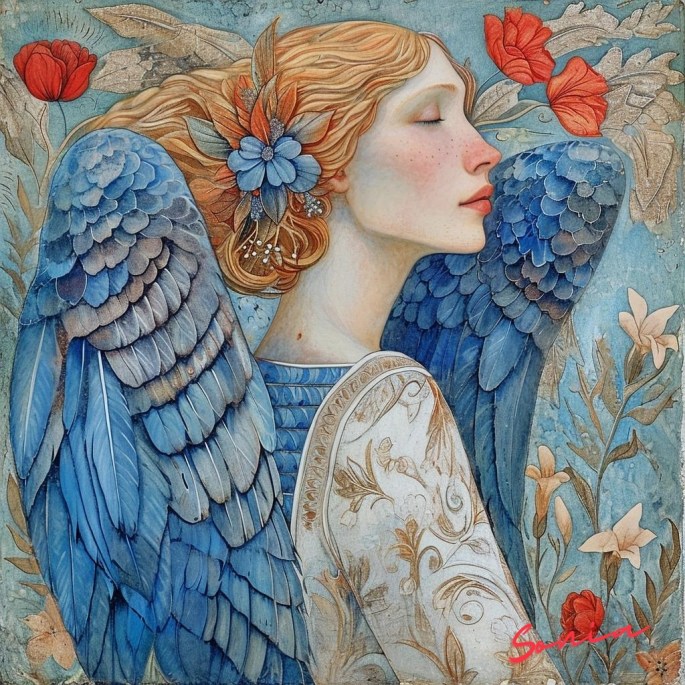
A.I. art by my mama Sonia Aichi. To me, she depicts the kind of peace proceeding a Holy Instant.

Returning home over and over again.

As my nervous system gradually returns to regulation, I’m reminded that healing is an ongoing journey, a continuous return home to oneself. The last few months have been like a bad acid trip shaped by the opinions of medical specialists that have transformed my life into a state of emergency. It’s incredible how radical a change can take place when value is given to meaning.

The foundation that supported my vibrant life with cancer began to crumble swiftly, and I was horrified at the rapid rate at which my health declined in response to my state. For over four years, I managed without the physical ripples of what society teaches us about cancer. My mind was steadfastly convinced of my body’s healing, until doubt set in.

My psyche was triggered, prompting my body to signal that surgery was the inevitable next step for my healing. This meant re-entering the medical system I had resolutely avoided for the last few years. Once I stepped in, a PET scan was required before meeting the surgeon to discuss my surgery. Previous scans indicated localized cancer in my breast, affirming my long-held belief that cancer does not “spread” but is born of separate traumas that accumulate along the way, often in dealing with the initial diagnosis and the fear it triggers.

Given my understanding of German New Medicine, it has become a double-edged sword, particularly in navigating the medical terrain filled with personal triggers from my past. Despite my reluctance, I underwent the PET scan to honor the commitment I made towards my healing, believing it meant the removal of my breast.

The shock was palpable when the results placed me in the category of systemic treatment before a mastectomy. Other areas showed higher sugar uptakes, hinting at potential cancer activity elsewhere.

In fight or flight mode, every ounce of knowledge abandons you when you need it the most, leaving you paralyzed in a state of fear. What made it worse was knowing I was only compounding the situation by staying in that state. Despite my spiritual training, I couldn’t break free except through drug-induced sleep. So, I resorted to opiates to escape my mind and pain, turning off my switch and hoping that in another realm where I existed, I would find my way through this.

I thought mastectomy was my ultimate offering, a fair trade for my freedom. Never did I fathom hormone treatment, radiation, or, God forbid, chemo! Was this some cosmic joke, the gods mocking me with, “You haven’t surrendered it all, honey!”

My entire system went berserk—angry rashes, swollen eyes, a clenched jaw, and an inflamed breast causing a constant fever. I’ve shed too much weight in too short a time. Terror shadowed me, and the woman in the mirror seemed unrecognizable. Worst of all, my faith wavered, and I sought refuge in opiates to evade confronting it, weakly promising myself that a good sleep would provide the strength to deal with it all when I woke up.

The opiates plunged me into depression, disempowered me, worsened my symptoms, and transformed me into a groveling victim. I knew that I needed to gather myself up and face this mother fucker of a situation- that meant a break from numbing myself. Around that time, my attuned parents responded to my SOS and decided resolutely to be by my side. Within a few days, my Da was giving me acupuncture treatments in my living room while my mom cooked beautiful macrobiotic foods and insisted on a strict schedule of copious supplements.

My DNA donors mirror my essence, blending my Japanese mom’s practicality with my Da’s stoic faith. They, along with my incredible husband, don’t have the answers, but together, we’re navigating the path. I sense myself returning home to the sanctuary within, anchored in love.

I must not fear the journey ahead but trust that clues will guide my way, as they always have. Recognizing the significance of remaining utterly open, I continue to trust in the guidance that will unfold. My task is to stay open until I know and to decipher what is not serving me, a process that can be a quagmire of stubborn belief systems.

God certainly works in mysterious ways and I am reminded that is through the extension of God’s Creations. I have to believe that help is on the way coming in ways that I can’t predict. Most importantly, I must not forget the boundless place within me where peace always abides, leaving my mind behind. I must continue to return there over and over again, whatever it takes.