THE CONCEPT OF ME

Aren’t so many of us in search of meaning in our lives? Isn’t that quest ultimately driven by the age-old question, Who am I?

When we’re born, most of us don’t yet know who we are. As we move through life, we begin to fill that blank space with ideas shaped by our experiences and the people around us. We form an image of who we should be—one that reflects inherited beliefs about what makes us worthy, safe, and special. Over time, we find ourselves striving toward that image or resisting anything that threatens it.

Our sense of good and bad is shaped entirely by experience. Some of us are even taught to mold ourselves into someone else’s version of “good,” or to believe that what another person calls “bad” is actually right.

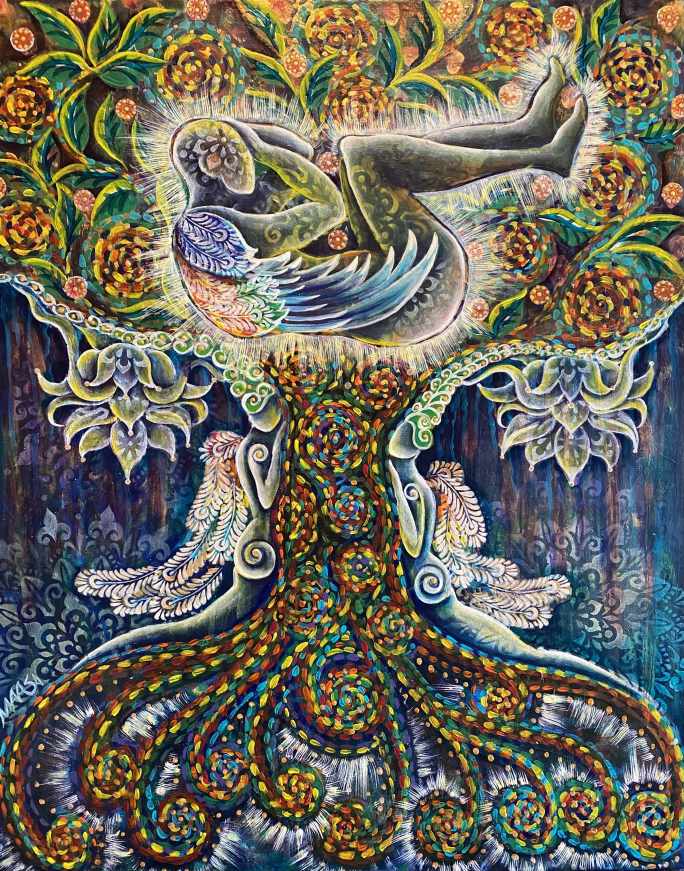
Being born can feel like beginning a painting on a blank canvas. At first, each brushstroke is our own, but as life unfolds, other hands begin touching the canvas—through influence, circumstance, and expectation. Eventually the shapes and colors morph into something foreign, something other than me.

So we keep painting, layering new strokes in search of meaning, hoping to finally create something magnificent. Yet the more we add, the more we forget what was there before the first stroke—the untouched space that quietly recognizes itself completely.

Perhaps our longing comes from that remembrance. In this way, the world becomes the practice ground—to learn to unlearn the belief that we must become something in order to find peace. We gently undo every version of ourselves we thought we needed, each one an avatar created for a different chapter of the dream. But who is the one dreaming the life lived through them?

It can feel mind-bending, especially when our senses insist that only matter is real. Yet suffering always arises at the borders of the self-concepts that make up the collective—the places where we divide and separate. When the little “i” of separation becomes the center of perception, we can’t fathom the all-inclusive reality of Love—a Love so abundant it breaks the laws of this world, where one’s gain must come at another’s loss. In the realm of the shared Self, what is given is also received, because the giving and receiving happen within the same One.

When I scrutinize what version of myself would finally make me happy, I see that I can never be truly satisfied, no matter what I overcome, do, or achieve. Fulfillment based on what my body does—or fails to do—is always temporary. I find myself asking: What are these values for? What version of myself am I protecting, and why am I so afraid of losing it? Perhaps it’s because I made it and it feels so precious.

The healthy self, the creative self, the strong self, the generous self—all exist beside their opposites, each quietly in conflict with the other. Life becomes a dance between these selves, each grasping at fleeting ideas of happiness and safety.

My state fluctuates with my mind. My vitality can be snatched away in an instant when old fears catch up with me in a single thought. Even when nothing around me has changed, the thought I don’t want this to change can take my healthy self hostage, seized by the one facing the formidable unknown.

These moments remind me, viscerally, that no version of my constructed self can protect me from impermanence. Peace can only be found through trust in divine law—the truth that we are already perfect, whole, and eternally safe as we were created, of the same essence, beyond any concept of ourselves we could imagine.

I can only begin to envision that everlasting beauty, and so I practice believing—trusting that what is real has never changed.

When I contemplate my true identity as a perfect creation untouched by what I think or do, I feel immense relief. Whatever I believe I am—or should be—has nothing to do with what I truly am. Beneath all layers of self-concept lies the original, unalterable holy Self, exactly as Love created me. This same unchanging Self lives in everyone, quietly waiting to be remembered. And because our minds are ultimately joined, remembering it in myself and choosing to recognize it in others helps reveal it in all. This is no easy feat, especially in the face of pain or injustice, nor does it turn me into a passive bystander to be tossed about. It does, however, give me the sense that I’m standing for something meaningful—something that points toward a freedom resting on stable ground.

Duality—the yin and yang of life—reflects the tension of opposites that governs this finite world. But what if duality was a choice we made with the first stroke on our canvas? What if we set in motion a painting meant to contain everything we thought we wanted, only to discover that no canvas could ever hold what we truly are?

And yet, beneath every shifting stroke, something changeless remains. The shared Self is untouched by striving, fear, or judgment. The world continues to teach and challenge us, but we can look beyond its rules for solutions—to step back, breathe, and question what is determining our state.

When the insanity and heartbreak of this world bring me to my knees, my practice is to return home—to divine reality—where our shared essence holds us, and peace is all there is.

Holding this paradox—the life we experience and the perfection of our true identity—is where I seek freedom. As we release the layers of self-concept that shift with every experience, we find steadier ground within. Each moment of awareness becomes an opportunity to return to that quiet, unchanging Self—the part of us that has never been lost. Even for an instant. And that instant can lengthen into the next, and the next.

Life is not about finishing the painting or capturing every detail perfectly. It is about remembering that the masterpiece already exists within us—the quiet assurance that nothing we do or fail to do can alter what is already complete.

This blog was inspired by my reflections on my weekly ACIM Essentials class, “A Case of Mistaken Identity,” taught by Robert and Emily Perry at the Circle of Atonement. They have a vast selection of podcasts exploring A Course In Miracles here https://circleofa.org/podcast/
GOD’S GUARANTEE

I was searching for God in my dream last night. Where are You? I need to know that You are there. I need to know that I’ve invested in what is real. I need to know that Your promise is the truth. I need to experience it in a tangible way — through my felt senses, here and now.

And then, in an instant, He answered my call.

From the room of my dreamscape, I was lifted and suspended in the open space of my mind — my back to what I’d left behind, my heart open to the light that filled the sky. A surge of ecstatic love rippled through every cell of my being until I became it. God’s love filled all the cracks of fear and doubt within me. The joy I felt broke the lineage of time and folded into itself to always. The jubilation of receiving proof that I had placed my trust in Truth was the only answer I ever wanted.

I can still feel the realness of that dream — how my prayer was answered in a way so certain and strong that it carried into waking life. Its presence now is a guiding light through the trials we are to navigate. Our collective ailment of fear is like a house of mirrors, reflecting our individual plights in distorted ways — each of us wrestling with different shapes of the same illusion. Fear convinces us we are alone, fending for ourselves, while love reminds us that we belong to a unified force far greater than anything we face on our own.

What makes us feel so alone? It can only come from believing we are separate from each other. A Course in Miracles teaches that we were born from perfect love, created with limitless potential. Yet somewhere along the way, the idea of a separate self arose — what was One seemed to become many — a choice made through our own free will.

Making the choice to separate from the love that held us all is where our initial sense of guilt took root. Fear then becomes the fuel that keeps the illusion of separation alive. The Course helps me see that an all-loving God didn’t create suffering — we did, through the limitations we place upon ourselves, and by guarding the idea of the self we made.

It’s that time of year again — when autumn’s changing colors remind me that we’re moving into the season where darkness begins to dominate the day. It’s shedding time. The trees make it look effortless to let go and dare to be bare, but it’s not so easy for me to stand naked amid the landscape of my scurrying thoughts.

As the light gives way to darkness, so do my thoughts. My mind keeps hooking into where I was this time last year. Old stories have a way of repeating, creating more of the same — especially when a trigger appears. Yesterday gets dragged into tomorrow, skipping the beauty of today. The body follows wherever the mind gets caught. Fear travels that line and embeds itself in the tissues, plucking a string like a note on a guitar — echoing the story I thought I’d left behind. I feel the familiar tightening in my chest wall, and my breath hitches.

Unconsciously, my hand traces the smooth contour of what remains of my right breast — a stark contrast to the rough terrain of bound-up scar tissue beside it. The small leftover lumps that appeared on the PET scan lie beneath the part I got to keep. To feel them, I used to have to press my fingertips deep, but that has changed as of late. They are moving toward the surface, pronounced and making their presence known. My fingers anxiously feel them, a habit from before, which is taking root in the fertile soil of my mind. How easy it is to falter beneath the snowball effect of fear, to get lost in “what ifs” and “what to do?”

Nothing in my present state even comes close to where my mind tries to take me. Physically, I feel vital — stronger than I have in years. Yet fear, born in the past, has the power to erase all proof of truth in the now. The anxiety of having my current blessings robbed by what this could mean is a ball and chain that can easily take me down.

I anchor to God’s guarantee that I felt in my dream — that my true Self is not my body or the things that happen to it in the passing of time. I carry a small treasury of A Course in Miracles lessons within me — teachings that help me unhook fear’s grip and return to refuge. I steady my runaway thoughts with a remedy found in a lesson: I can be hurt by nothing but my thoughts. I breathe it in, examine my thoughts, and ask gently: What thought am I believing in?

At the root of them all is the fear that God would abandon me.

I have to admit — my faith is not yet whole. Somewhere in the shadows lurks a quiet terror: what if I’m wrong?

So I begin again — the slow, steady work of untying the knots in my thoughts. Finding freedom in reaffirming what I’ve learned and experienced. The evidence of receiving guidance and finding my way is held in God’s love, extended through His Sons and Daughters no matter what I am up against.

I want to affirm that my body’s sole purpose is to extend love — that life’s work is to forgive the false concepts we’ve made of ourselves and others, the ones that make us forget what we are really made of. Even when fear trickles in when I keep God at arm’s length, somehow His grace always invites me back Home, to where love lives and where I am forever safe.

POLKA DOT ORANGE LIGHTS

“I’m happy about your results,” my oncologist says over the phone. She’s relaying the radiologist’s report from my recent PET scan. I’m surprised by the felt sense of release, even though I had convinced myself that this time I wouldn’t let it get to me. I wouldn’t let the anticipation of the result become an invisible weight I carried. But it was still there. The difference is, I’m stronger now, and I can carry it without letting it drag me down.

Still, my light-as-a-feather release moment was short-lived. My quick translation of what she said was, “I’m done, I’m cancer free! Whoopee! Finally!!” But then she proceeded with what I didn’t want to hear which meant: it ain’t over yet.

The Coles Notes version is that there are lumpy remnants of disease bound up in my scar tissue. There are still a few small nodules left over from the breakdown of the big tumour. I focused on the positive: it’s no longer in my other breast, sternum, liver, lymph nodes, or in the suspicious activity that showed up in my right lung several months ago.

“There is a new lesion in your spine at T4 that we are going to have to keep an eye on,” she continued. It’s a game of give and take, and what is left over is where I have to count my blessings. My mind quickly grasped for an explanation.

I had two terrible falls last year where my heels went over my head and I smashed hard onto my back. Both involved slipping and landing on solid slabs of wet rock. The first time, I broke my fall with my left arm, which fractured my humerus and left me with a frozen shoulder I’m still patiently thawing out.

The second time was a classic ass-over-teakettle slip down the stone steps to my garden. That time I remember lying there motionless, afraid to move, praying that I hadn’t broken my back.

“Could a fracture or major trauma in that area cause a higher glucose uptake in the scan?” I ask. I can hear the desperation in my voice and feel my heart squeezing around panic. “It could,” she replies, “but the formal report says that it is likely a metastasis.”

This is how it starts: fear finds a crack to get in. If I look away and let it in, it will take hold—and that is what metastasizes and spreads. That is what alters my experience from being free to becoming a prisoner. I know I have to nip it in the bud—not with denial, but by shifting my awareness to a greater Reality that will guarantee my safety.

This is the thing: the radiologist is commenting only on the supposition in cases like mine. The last PET scan was done over a year ago, when the orange glows of sugar uptake in my report were polka dotted in too many places. Assuming that cancer “spreads,” all the orange glows led to the presumption that it was all cancer — even though healing tissue also takes up sugar. This is my own disclaimer on these super sensitive machines that pick up everything. I was never completely sure that was the case, but I didn’t want to biopsy bones and organs, so I went along with it, hoping it wasn’t as bad as it seemed. It was most likely denial, but at the time, it was the only defense I had to keep going.

The radiologist comments on my scarring as a “surgical site,” which it is not. The scar tissue was not from a clean cut surgery. I wanted him to know what I endured—that I didn’t have the option for a quick and easy removal of my problem. It’s more like a mesh of healed tissue from a decomposition site. I find it mildly annoying that the guy writing this report has no idea what I’ve been through and writes without considering my falls as a possible explanation for the T4 light-up. I recognize my annoyance is guarding what I want to keep safe, so I let it go with my next out breath.

My oncologist is thorough and pulls up the last three PET scans, spanning two years, to compare them on her screen. “Maasa, you really should see the changes in the imaging. You can literally see those orange globes of light around your body dissipating with each scan. I think you would feel really encouraged if you could see what I see,” she says. I love this woman, especially because she wants me to just keep doing what I’m doing. And even though there is no real end to talk about in terms of treatment, I decide that this is good news—because really, it doesn’t change anything. I can keep living the way I am.

I had decided I wouldn’t live suspended on “what ifs.” There will be more tests, and the only constant is change in whatever direction life flows, so I’m training my mind to anchor to what is steady and forever. It’s ongoing daily work — practicing permanence in a world that only guarantees impermanence.

I was nervous when I signed up for a workout class that I used to do in my twenties. I’d been feeling the nudge to get strong, to push healthy oxygenated blood through my system for a house clean. To feel those endorphins combat the restrictions in my body, to be told what to do by a guy that inspires me.

Coach tells me not to ask questions and just do what he says. That is exactly what I need: just show up, do the work, and get on with it. I survived the first week of a strenuous, sweaty workout, which confirmed for me that so much of how I feel depends on the limits I place on myself. Sure, I have to modify here and there, but my body followed the state of my mind that chose not to let anything get in the way.

My monthly treatment in the chemo lounge was right after class on Friday. My veins were so pumped that, for the first time, the nurse couldn’t get an IV into me. It gave me a funny sense of satisfaction—even though it hurt to have her poke and prod until I finally relaxed and let her in.

It’s helping my mindset to know that the cocktail of two drugs for my targeted therapies does not damage my healthy cells. Instead of attacking fast-dividing cells like chemo, they target and block the receptors that fuel the cancer cells. The hope is that, without fuel to grow, those unruly cells will weaken. With me strengthening my own immune defense through everything I’m doing—mostly mindset, herbs, supplements, and exercise—they may eventually remember their true function and return to behaving like healthy cells.

My life can easily be defined by tests and the shifting statuses of this disease. What I’ve learned from the latest PET scan is that I’m still reaching for the finish line — and I don’t want to be in a race. My path is the one I’m on, and anticipating it to be any different will only cause me grief.

Tests come in three-month increments. Thankfully, the next one is an MRI, which I requested because I need a break from the radiation of these nuclear medicine machines. Rather than reaching for a different kind of life or pinning my hopes on a better scan result each time, I’m practicing being here now — finding perfection even in the nooks and crannies. To be an expression of the good stuff I want to share — and for the rest, I place the future in the hands of God.

NOW WHAT?

The acute phase of survival has since passed, and in its place, a gap has opened—space that wants to be filled. I feel the aftershock in residual tremors, my footing seeks traction in the space ahead. Now, life back to somewhat normal pulls me into the trap of restlessness—as if I need to make up for what I’ve been through by becoming someone of more value.

It’s ridiculous, but even after all this, it still comes to get me. I’m still getting duped by the habit of assigning value to what I do, instead of resting in the quiet grace of all that’s been given to me. Even as my intellect understands that I’m already at home base, the self I’ve constructed keeps me running—from the perfection of how I was created.

I feel the pressure to do something significant in return for the extension of my life. I thought I was done with the rhetoric of that harsh inner voice—the one that drives me to do more, to be better. But ego is loud, convincing, and insistent—sending me out in search, while I forget that I’ve already been claimed by an inherent happiness that asks for nothing in return.

Cancer takes up so much space—not just as an all-encompassing distraction, but as something that gave meaning through the effort to survive. The biological malfunction that became my greatest challenge also cracked me open, allowing light to come in. Now that I have a relationship with that light, I’m on alert for what blocks its shine.

I feel the tension of knowing that my scramble for purpose is rooted in fear—the fear that if I don’t fill the gap with what I make of myself, the disease might return and do it for me. So the focus shifts to the next problem—whether it’s the volatile state of the world, the financial pressure we’re all facing, or the endless causes I feel helpless to do anything about. It’s all an outward projection of the same thing: I’m still trying to fix it from the outside, instead of settling back in.

As I sit here after my quiet morning contemplation, I’m reminded that ego will have me seek but will make sure I never find. It distracts me with a sense of urgency to do something, anything for an illusion of a fix of what can’t be fixed from the same level where the problem was created.

I’m finally free of that horrendous pain that once felt like it would never end. But the gift of coming out of it is so easily forgotten as I latched onto the next mountain to climb.

The unsettling sense that I needed to do something should have been my cue to pause and examine the root of that urgency. Instead, I convinced myself that I could be of value by helping my husband, a developer, and jumped into a path entirely outside my norm—just as I was beginning to come up for air. The idea felt so far removed from my usual operating system that I mistook it for clear guidance. So I enrolled in a university-level course to become a licensed realtor, with the intention of selling the units he built.

It only took ten days of misery—battling my brain to retain information I had no desire to keep—before I could admit I’d made a mistake. The choice came from fear of the open space that was actually meant for my happiness. I’m still on the mend, still receiving ongoing treatment, and still hold my breath when I click open my blood test results every three weeks. My gratitude for my health had been misplaced in what I could do with it instead of simply basking in it.

I’m of value because I’m still here, doing my best to live and share what I’m learning. Even though I don’t fully understand how, I trust I’m doing my part for the healing of the collective. This is what I return to when I find myself spinning out of orbit. To come back home to happiness and shine out.

It’s important to mention that much of what I write is inspired by my ongoing study of A Course in Miracles. That said, studying it doesn’t mean I fully understand it. It continues to meet me exactly where I am, gently guiding me to live to love.

Above painting by maasa.ca

MIRACLE SHIFT

“Your CT scan shows that you’ve responded exceptionally well to treatment,” my oncologist said excitedly over the phone. “There doesn’t appear to be any tumours in either breast although, It’s hard to assess the right one due to extensive scar tissue from the ulceration. What spread into your chest wall has receded, the thickening in your upper sternum is stable, and your lymph nodes look clear.”

I was surprised by how calmly I received the wonderful news—perhaps because it simply confirmed the profound shift I’ve been feeling lately.

Three months ago, my CT scan showed disease progression from my right breast into my chest wall, in the sternum, and in my lymph nodes. The tumor in my left breast was also evident. Due to my chronic infections, I was able to forgo the chemotherapy portion, which would have depleted my immune response, and instead gave my body the chance to fight back against the infections. With stage four metastatic breast cancer, the recommended treatment was aggressive. My unique situation gave me the chance to stumble upon a miracle.

After two targeted immunotherapy treatments with minimal side effects, all four of my tumor markers dropped below the normal range for the first time in five and a half years. I requested a CT scan after my third treatment, knowing I’d likely be recommended to add chemotherapy for the following round since my infections had cleared. I needed to know if my insides reflected how I was feeling—and they did! My doctors believe that the targeted immunotherapy was solely responsible for this miraculous turn of events. I have my own belief, which I attribute to a higher order I’d placed my bet on.

“I still advise you to do chemo and take advantage of this window to clear out whatever may be left of the cancer,” my oncologist continued. I’m incredibly grateful to have been matched with an oncologist who respects my decision-making process. For now, I declined the chemo, as my body is relishing the vitality that had been absent for so long. The thought of compromising my entire system, just as it was moving towards homeostasis, felt more like a risk than a benefit. However, I’m careful not to cling, as I need to remain open to pivot when necessary.

The only “barometer” I’ve put my faith in is the level of peace I feel in the choices I make. I’m talking about the kind of peace that can’t be manufactured for safety’s sake—the kind that is all-encompassing, a ‘yes!’ that I can fall into and feel held by. That’s what I felt after I declined chemo for my next round.

I’m learning that the only power worth giving is the Power I lovingly surrender to. Time and time again, I’ve been shown that when I do this, I’m being taken care of. I know when I’m not doing this because I feel a tightening around the reality I want to control. So, when I notice, I let go again and again, praying to be shown the way. The way has at times been scary, painful, confusing, and messy- it’s only from this vantage point that I can see the meaning in all of those experiences. This is what I need to trust as I keep following the way. This is what Da calls a miracle shift.

I hadn’t disclosed to my doctors the other ‘therapies’ I believe contributed to my ‘exceptional response.’ A fringe protocol, showing great promise as a cancer cure, came onto my radar last year. I began it as a last-ditch effort to make a difference on my own before seeking help from the conventional system. However, I didn’t use it long enough to give it a fair trial. The use of repurposed drugs—existing drugs originally developed for one condition but used to treat another—was gaining momentum and showing great promise for healing even the most aggressive and untreatable cancers.

The research I’ve done has given me enough confidence to test these therapies on myself, especially since, based on what I’ve gathered, they won’t interfere with the efficacy of my treatment and are relatively harmless. I’ve also been taking Artemisinin, derived from the sweet wormwood plant, often referred to as ‘herbal chemo’ due to its potent anticancer properties. Alongside this, I’ve maintained a steady regimen of herbal tinctures, teas, vitamins, high doses of anti-inflammatory supplements, and antioxidants to neutralize free radicals.

I also take time for my daily ritual of forest bathing and prioritize having meaningful, heartful connections. I can feel the power of the prayers from those who pray for me. I’m sure all of these have contributed significantly to my current state, but what I give the most credit to has nothing to do with what I put into my body.

My day begins with aligning my will with the greater will of God. It is only from this place that I can live fully and flourish, even with this disease. I need to recalibrate throughout the day because it’s so easy to get lost in our mortal predicament. So, I keep coming back, and I keep placing my faith in what I can never fully understand but can trust. I trust because I keep finding my way.

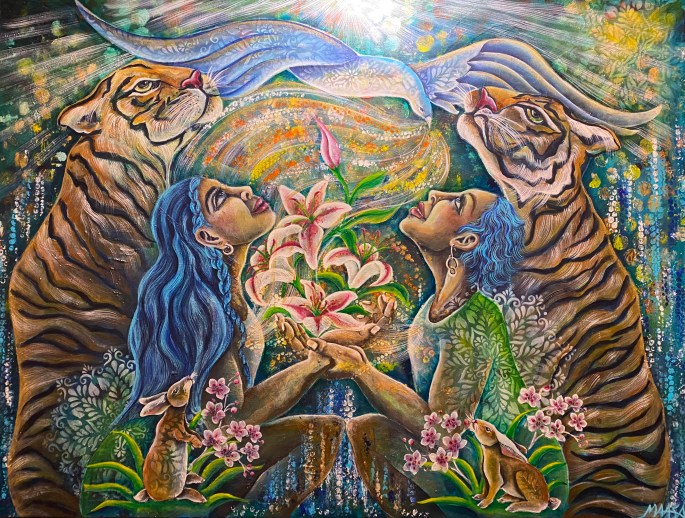
Banner painting “Of The Same” by Maasa. In the spirit of our Sameness, we celebrate what can’t be threatened or taken away. What we thought we forgot is redeemed in the remembrance that was never lost. More of my art mine may be seen @ http://www.maasa.ca

DON’T ASSUME ANYTHING

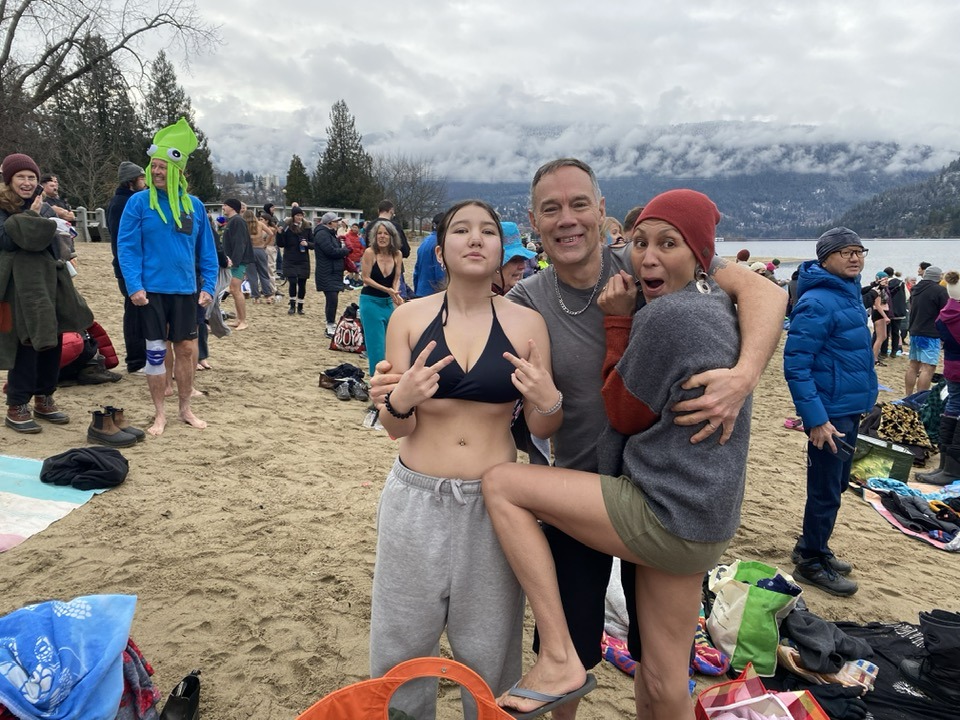
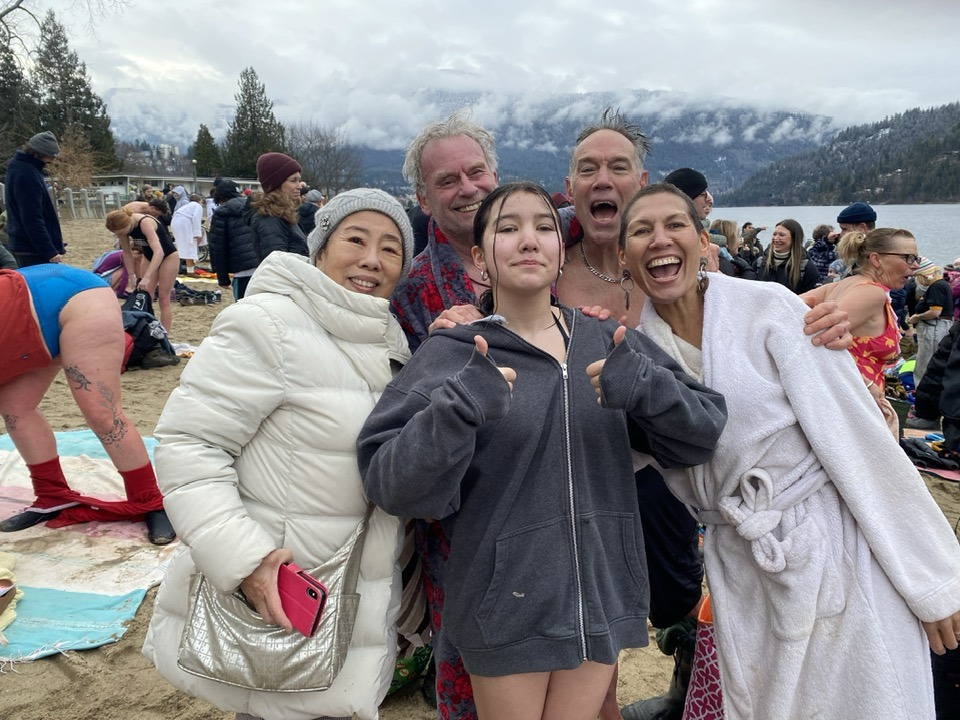
As I sauntered into the frigid water amidst the flurry of screams, splashes, and gooseflesh, I was reminded of the simple yet profound lesson: don’t assume anything. The annual polar bear dip in the lake has become the only real symbolic tradition our family shares.

It began during the debaucherous phase of my husband and my early courtship over two decades ago. Still thoroughly inebriated from the epic party of New Year’s Eve, we impulsively jumped into the bone-chilling glacial waters of Kootenay Lake, desperate for a cure from our horrible hangovers.

Unbeknownst to us at the time, this impulsive act would evolve into something far more meaningful. What started as a way to rid the debris of toxicity transformed into a symbolic ritual—clearing the slate for a fresh start each new year. I had so much to release from the most challenging year of my life.

Leading up to the grand event, I was still pleading for respite from the debilitating pain induced by my chronically infected wound. It was outrageous to even consider jumping into a lake already laden with bacteria, made worse by a slew of people transforming it into a cesspit of infection-loving agents. Not to mention, I was on standby for a palliative mastectomy, which wasn’t for a curative cause but rather a necessary step, with its own unknowns, in order to proceed to the next phase of treatment that would hopefully nuke the cancer.

I had reached—or so I thought—a stalemate with my eight-month ordeal of enduring the gruesome ulceration of my tumour. Only in hindsight can I see the blessings hidden within periods of doubt, suffering and fear. I wouldn’t have been eligible for surgery if not for the recurring infections. I wouldn’t have started the new treatment had my cancer not mutated into a different kind. I was ready to let go, my hands open.

But my hands gripped, white knuckled in the darkness. At night, my trust waned, smashing against fears and contradictions of my own making. My heart raced with the terror of losing parts of myself. What security was there in what I was willing to give? My mind fought, freaked, and froze around runaway thoughts that I could not control. Would I regain mobility in my already compromised arm? Would I be left with a Frankenstein version of my current wound, along with a donor site that might not heal properly? Would my cancer run rampant? Death lurked close by, and faith was but a whisper in my shallow breath.

With a new day and along with the light, I pray to strengthen my trust in letting go. The more I release the need to control and arrange the world around me to feel safe, the freer I become to recognize the path unfolding for me. I’m learning to trust this way because I feel at peace with the next step—only as it unfolds. When I analyze and weigh my options, mingling them with combative emotions, all that happens is that I go around in vicious circles. Decision making brings only anxiety and uncertainty. I cannot be trusted operating from this place.

In my right-mindedness, I see how my perceived safety net is hooked onto anchors that aren’t secured deeply. My constant attempts to rearrange and stay on top of what I’m trying to control only make the net tremble, precariously holding everything together.

This is why A Course in Miracles teaches me to let go of what I think I know and offer my free will for guidance—to see beyond the mind I have constructed and trust in what I don’t yet have the capacity to understand. It’s a big ask, one I often meet with resistance: to take responsibility for all that I don’t want to feel, while finding empowerment in giving up what I’ve given power to.

The help I’ve received has come in ways I could never have planned or imagined for myself. My nemesis, the staph infections that prevented me from getting chemo, instead allowed me to receive the gentler targeted therapy portion of the IV cocktail.

I never would have imagined that one treatment of the targeted therapy would reroute me into the lake. By the time the surgeon called me back just after Christmas, my wound had transformed from an angry, oozing mess into something that actually looked like it was healing. Before I could share this update, he gravely explained that I would need invasive surgery to remove my breast, cut into my pectoral muscle, and go deeper into the chest wall. This would be followed by extensive reconstructive surgery requiring specialists. I’d have to carve out parts of myself to remake what had been taken away—all with the looming risk of poor healing or the cancer compromising me further.

He was surprised and excited when I told him that my wound looked better than it ever had—that it actually seemed to be closing with healthy tissue. For the first time in over a year, I no longer needed morphine to manage my pain! He agreed that the best path forward was to get on with treatment as soon as possible.

My path continues to twist and turn in surprising ways, reminding me that a higher working order is in play when I choose to trust. The onslaught of antibiotics for my infection had concerning repercussions on my gut. When another three weeks passed, I received the same unorthodox treatment without the harsh chemotherapy. Truth be told, I’m still terribly afraid of chemo. Even though the infection and gut issues looked horrible from the outside, on the inside, I felt as though I was being gently guided to not be afraid.

The genetic testing result I’d been waiting for over two months might be ready before the next round of treatment. Knowing I have a good match would give me the courage to shift my perspective and fully accept chemo as medicine, not poison. I’m placing my trust in divine timing and also leaving room to have no set plan in place.

My practice is to remember to stay open, even when I feel the urge to close tightly around all that is precious to me in an attempt to protect it. There is a paradox in handing it all over, where freedom intertwines with the terror of letting go, until the moment both hands open. I keep coming up for air on a regular basis. I forget, and then, by the grace of God, I remember that life cannot be truly lived while fearing the loss of what we love. A Course In Miracles teaches that Love is the absence of fear.

I’d triple-secured waterproofing over what was left of the open wound—an upside-down heart-shaped opening where my breast used to curve. Below it, a bridge of healthy tissue between another meaty section that’s shaped like a semicolon. The deep, long and narrow bottom of the crevice, prone to infection- hidden for months, had finally widened and risen to the surface to dry out. I couldn’t even remember the last time I’d fully submerged in water.

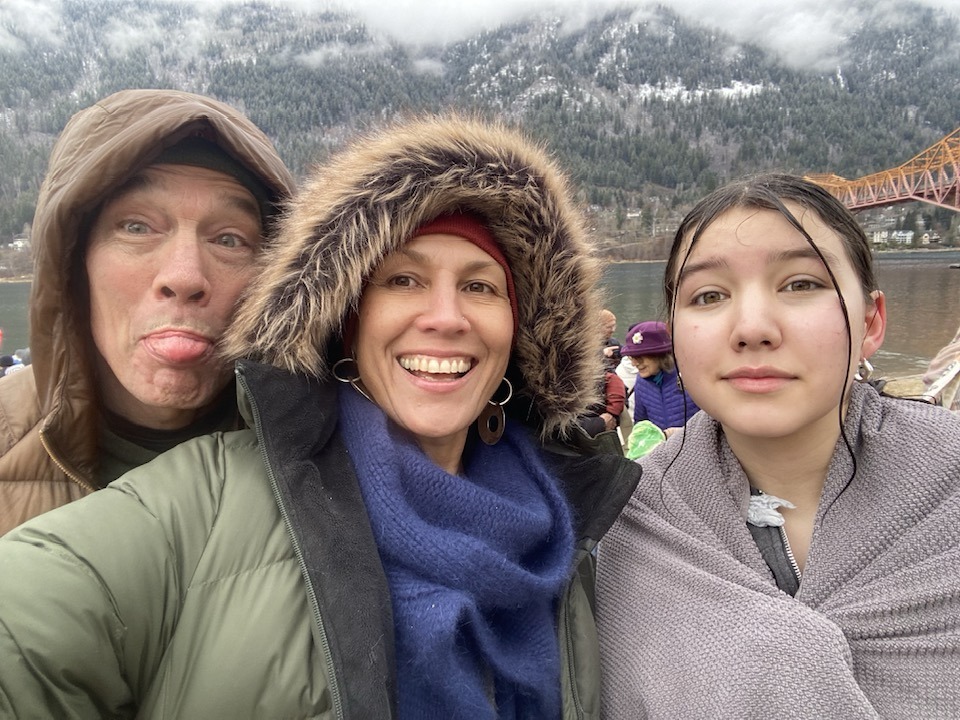
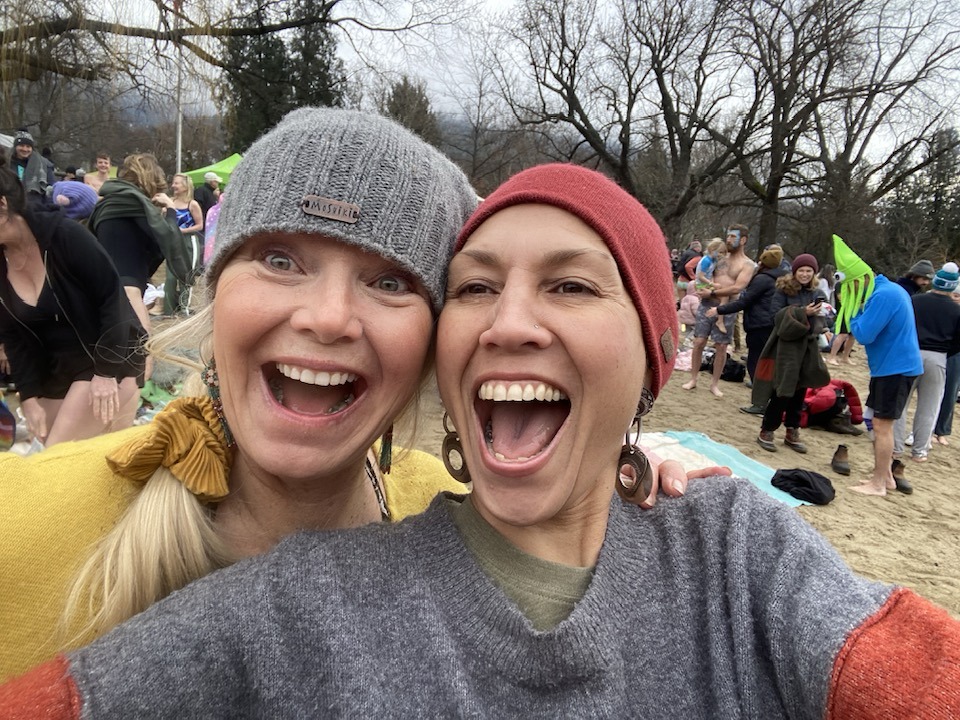
Albeit the middle of a Canadian winter, the beach was devoid of snow. While the weather was milder than in other years, I still hopped between my bare feet, stripped down to my bathing suit. A sizable crowd had gathered, many of whom I recognized as seasoned veterans, shrieking with excitement. Da danced around in his bathing knickers, my husband hollered, Mama was, as always, ready to document with camera in hand, and my teenage daughter grimaced against the cold. Together, we prepared for the plunge, my family by my side.

This was it—we all needed to press the reset button, and this time, I would do it with focused intention. For the first time, I didn’t rush in and out. I took in every step of the way into whatever comes next, and found my way back to shore.

CHAOS TO LOVE

The process of biological changes manifests as loud, outer expressions, screaming for attention. It’s so easy to be swept away by these acute sensations and fall victim to them. When my focus latches on, it’s like a ravaged dog clamping onto a bone, unwilling to let go. Escaping the madness of what all this could mean requires a quantum shift in awareness.

Now, both breasts are mutating. For months, I’ve been witness to the gruesome disintegration of a mass that, depending on my mindset, can look like healing or like cells spiralling completely out of control. My awareness has evolved, revealing just how easily I can be whisked into victimhood and pulled into dark, unsettling territory. This new lump on my other breast is a different cancer—its subtle emergence allowed it to slip under the radar of my current treatment. It is not hormonally driven which means I’ll have to consider an alternate plan.

The use of my right arm now has limitations due to the swelling of trapped lymphatic fluid under my armpit. This breast has shrunk to half its size as the tumour corrodes. My right wing feels taut, wrapped tightly, like it’s encased in saran wrap. I’m quite certain there’s tearing in my tissue from all the stretching thats causing the edema. The open crevice reveals a dark abyss where there is a battle taking place. The other day, I pulled out a piece of rotted flesh the size of a loonie, and the sight of it made me woozy. Is this process of tissue dying off a form of healing, or am I slowly breaking down?

Yesterday, nearing the end of a peaceful forest walk, a distressed call from my daughter coincided with my dog getting into a vicious dogfight, instantly changing my state. Whirling around, I stepped onto a slippery rock, sending my phone and legs flying into the air. I broke my fall with my good arm and went into immediate shock. It felt as if the opening on my breast ripped wide open, while pain shot through my shoulder and wrist on the other side. The tranquil forest suddenly became a stage for my screams, echoing alongside the brutal sounds of the dogs fighting—a symphony of chaos amidst the silent trees that my daughter heard on the phone lying nearby.

The thing with chaos is that it can feel like the entirety of time, pulling us into its trap. The dogs stopped when my boy, Apollo, sensed I was in trouble. Somehow, he knew I was more important than the fight and came right to my side, whimpering and crying with concern. I lay there, terrified of the damage beneath my bandage, now with both arms compromised. All I could think was, ‘Are you fucking serious? More pain?’ My mind quickly spiralled into blame—the wrong shoes, the dog fight, the phone call—but I caught myself and changed my mind. That road will take me nowhere but down.

Becoming something of an avid traveler in my mindscape, I recognize the familiar downward spiral. Each descent reveals traps and my entire existence hinges on if I can step over the traps and respond to life in an affirmative way. Can I find peace amid so many frightening, moving pieces? No, not always and not right away. What I’ve noticed is that when I strip everything down to this very moment, I’m okay. Nothing is imminently ending. If I separate myself from the pain as an external experience, I can find pockets of respite simply by being here.

As I type, each press of a key reminds me of what’s wrong with me, but I counter it with, ‘Well, at least I’m writing, at least no bones are broken, my boob is still in one piece, I’m eating, and above all, I am so deeply loved by so many.’ What’s truly scary is not knowing what will happen. Grounding myself in what I do know is the only solid counteraction I can hold onto. As long as I anchor myself in love without clinging to it as something I might lose one day, I have the magic antidote to get me through the toughest of days.

I have been stripped down in a way that has allowed me to love myself by truly accepting love from others. Suffering is the sickness of feeling utterly alone. I’ve finally allowed love in. I feel the sparkle of all my relationships shining bright like a lantern, guiding my way forward. In this torn-up world of differences, love is the only medicine. It’s the glue that binds us to life, enduring through whatever is thrown at us and staying with us always.

SPECIALNESS

Sometimes, clarity shines through like a beam of sunlight breaking through a dense forest—direct, bright, and penetrating. As I walk, spinning my prayer beads between my fingers, I realize that cancer is giving me an opportunity to see either through the eyes of fear or through the inner eye that reveals how I mold my reality to appease the demands of an unquenchable ego.

Beneath the many facets of fear that seek to control and wreak havoc lies a deep desire to be seen. As I learn the tactics of the ego, I am humbled by what my prayers reveal. Ego will weaponize fear to prevent me from stepping into the expansiveness of God’s perfect Creation. Attacks of belittling fertilize the ground for self-punishment and outward projection, attempting to fill the self-imposed cracks.

The need to feel important can only be rooted in the belief that we are separate from one another. Otherwise, why would we need to feel special? If we acknowledge that we are all of the Same, then we wouldn’t need to constantly be assured that we matter. When our perception of who we think we are—or who we should be—is challenged, we often respond by attacking and distorting our reality to assert how we want to be seen in the world. Is my twisted ego making me feel special because of cancer? The thought stopped me in my tracks.

Cocooned in the safety of the forest, I dared myself to be perfectly honest. Is my illness a manifestation of seeking love and acceptance? Am I coveting care and validation from others through this disease? Have I allowed myself to be defined by sickness? And the biggest question of all…did I create cancer? If so, can right mindedness reverse what was miscreated?

The discomfort and resistance of pondering these questions made it clear that even in the throes of struggle, egoic pretenses exist. The justifications that immediately followed only confirmed my realization. There are deeper layers of healing beckoning my awareness beneath the superficial symptoms. The lovelessness stemming from projections of myself, rooted in self-preservation disguised as safety, is not who I truly am. I can only pray for guidance as I align my will to bring to light what truly needs healing.

The willingness to uncover the matrix of my operating system can only come through forgiveness. It’s the pathway to avoid falling into the perpetual cycle of attacks—the default program of the human condition. In my study group for A Course In Miracles, I’ve learned to ask ‘says who?’ whenever I feel uneasy. The true Self always seeks to break through with love, inclusivity, and acknowledges the sameness in us. Letting go of needing any kind of validation from others is like a long exhale into ease.

Discomfort serves as a cue to inquire about who is truly in control. If I have the awareness to catch myself in fear, which fuel cycles of attack, competition, justification, grief, righteousness, guilt, denial, disempowerment, and inner arguments of othering, then I need to take a good look at who is running the show.

The challenge with waking up is that it’s easy to konk out and slip back into autopilot. Perhaps this is why we find ourselves here, with our humanness being our teacher or our foe. Aren’t we all running variations of the same program? One that evades fear, seeks love, yearns for uniqueness and correctness, and strives to achieve these in complex ways that often leave us feeling more isolated? Isn’t suffering rooted in our sense of feeling alone and doing whatever it takes to feel less afraid and disconnected?

What if our true nature is the opposite of all that? What if it’s just buried beneath layers of our projections, always prompting us to uncover what is already there? What if healing springs from remembering that what we truly seek is inherent within us, and everything else is perpetuated by the miscreations of our own will? What if we could just grasp the expanse of our true magnificence?

LESSON: ALL THE LAMPS OF GOD WERE LIT WITH THE SAME SPARK.

Banner painting: “REVELATION”- Acrylic on canvas by Maasa